
CLFF #7: Mistura, Eva, I Am Frankelda/Soy Frankelda, Under the Flags The Sun/Bajo las banderas el sol
Plus three shorts!!

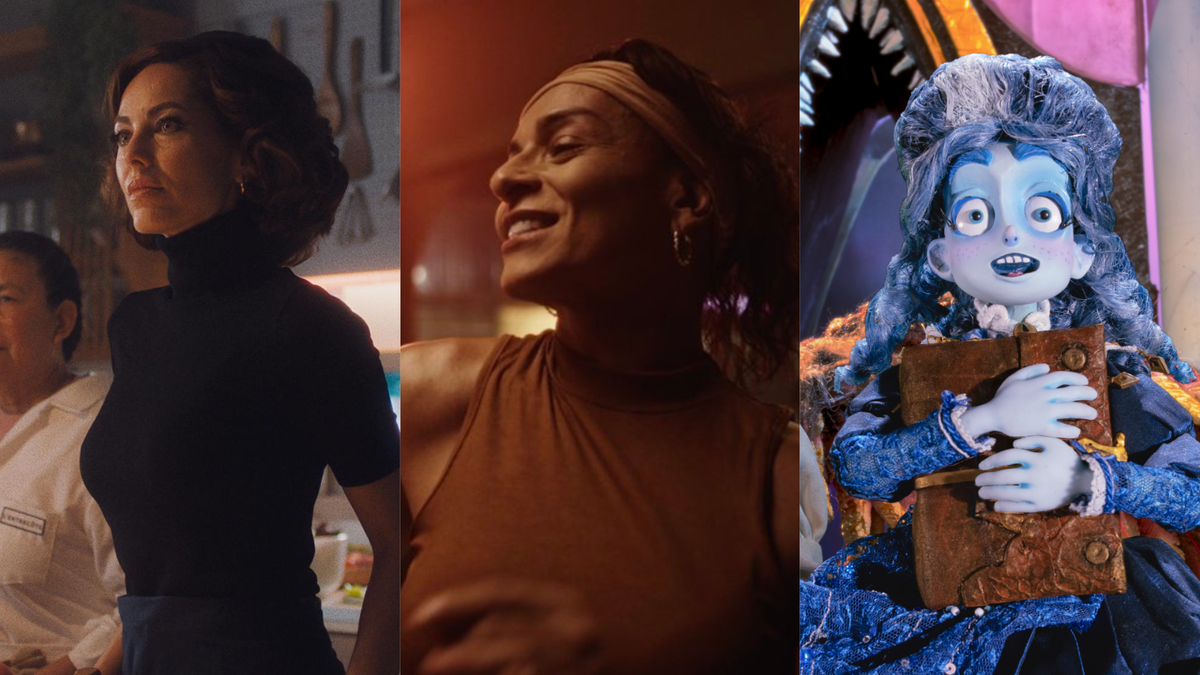
What a weekend it was, and what a week and a half it's been at the 42nd Chicago Latino Film Festival! I'll be attending Closing Night this evening with the screening of Ecuadorian film The Dog, My Father and Us/Nosotros, mi papá y el perro—my 15th screening from this year's CLFF.
Over the weekend I saw four films (three on Saturday alone) that have really cemented my excellent run in the second half of this festival. I also was pleased to be joined by friends and my husband for a couple of the films, making the experience of sharing this festival all the more special.
It can be a bit weird with a local film festival, especially when you're actively attending. It borders on a staycation (even if I am actually working). This is the most I've been outside of my neighborhood in such a short period of time in a very long time, and filling my time in between screenings by catching up on my reading, having a drink, going to the lake, or socializing with friends has made this feel like a proper getaway, even if all those little details have nothing to do with the festival. I love this opportunity to craft meaningful time outside the stress of bills, health, and what have you to appreciate this beautiful city and the beautiful people I've gotten to know in it. We should all take these moments that we have when we have them.
Now, onto these reviews...
SHORT: Chulo
Directed by Joshua Hernández
Puerto Rico 🇵🇷
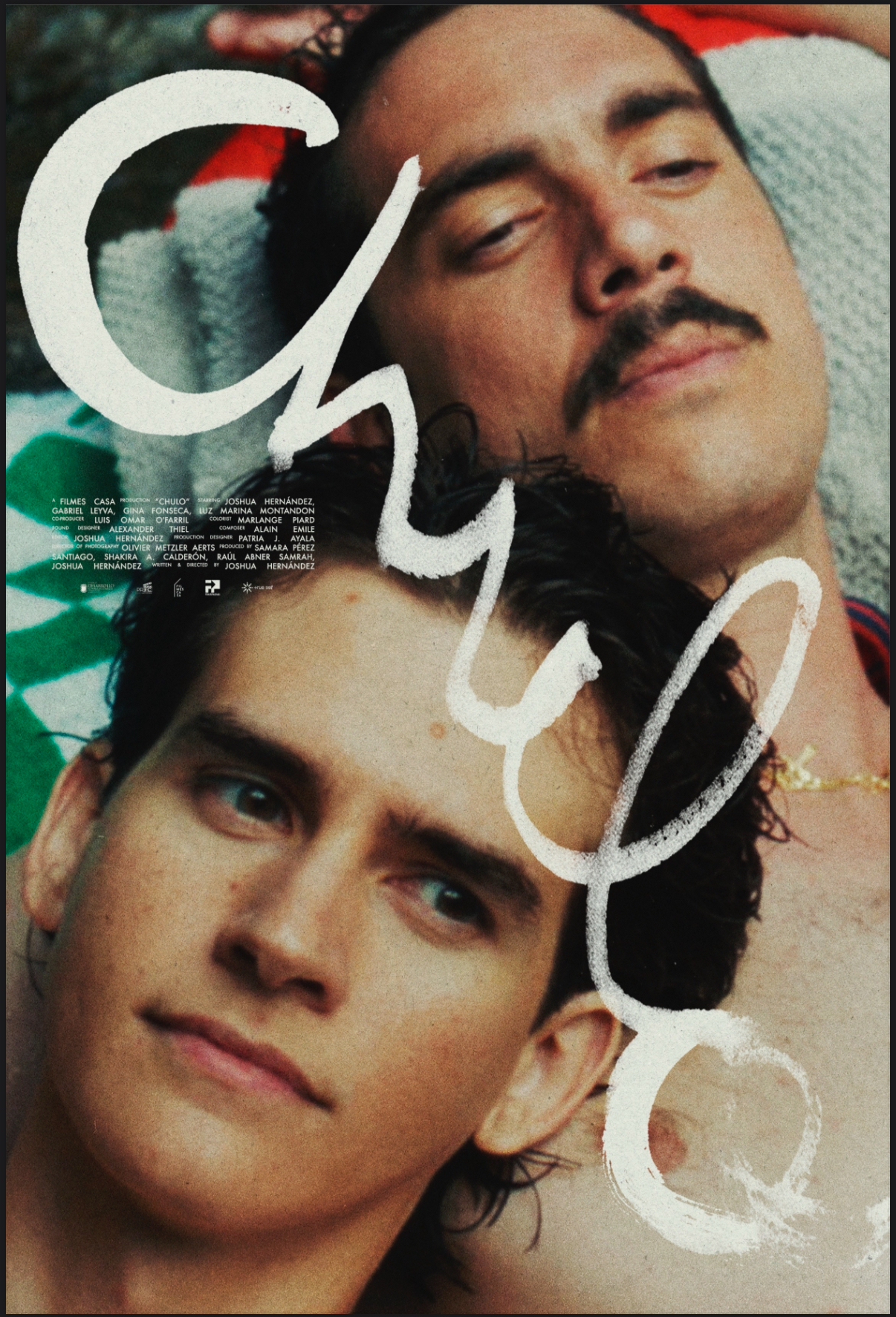
Chulo is a gorgeously-shot romance shot in Puerto Rico that had its world premiere at the festival. While the premise is pretty straightforward—Gael, currently based in the U.S., begins to fall for a local while visiting family in Puerto Rico—the compact film manages to fit in questions of how place fits into identity. The chemistry between the two leads is an extra boon for making you feel for Gael's longing (and potential heartache) in less than 15 minutes. It's one of the most beautiful-looking shorts I've seen at the festival, and a helluva way to announce Joshua Hernández as a filmmaker to watch.
Mistura
Directed by Ricardo de Montreuil
Peru 🇵🇪
I did not realize until sitting down for Ricardo de Montreuil's Mistura that I had put three features from Peru onto my schedule. This isn't a complaint, and if anything, is a reminder of the unique opportunities provided by festivals like CLFF. The three films I've seen from Peru this year (including To Die For and Runa Simi) span various genres, yes, but they also engage with different social issues in the country. To Die For was a drama that put a magnifying glass on misogyny and domestic violence; Runa Simi looks at the loss of the Quechua language and culture; and Mistura takes on class issues in 1960s Lima.
Mistura is about the most delectable hour and forty minutes you could have libbing out. We follow Norma (Bárbara Mori), a middle-aged French Ambassador's daughter who gradually learns to shed her classist superficiality once she's liberated from her pig of a husband. The beats that follow are largely predictable, especially when the roles of the characters around Norma take shape. Her driver, Oscar (Cesar Ballumbrosio, an iconic musician in real life better known by the nickname "Pudy"), has a relationship to Norma that at first is dangerously close to a Driving Miss Daisy situation, but thankfully moves in a slightly more enchanting (and romantic) direction. Norma's housekeeper, Rosa (Hermelinda Luján), has known her since childhood, and is the unfortunate collateral damage of Norma and her husband's separation. Norma's distant son Gerardo (Stefano Meier) is a proper hippie, down to the sideburns and denim. And Norma quickly learns from her banker (Juan Pablo Olyslager) that she is at risk of losing the house if she cannot make the payments. How will this socialite who has never worked a day in her life manage? Will this ragtag team representing different cultures in Peru come together to save the day? The answer is about as unshocking as you expect, but the results are nonetheless exquisite—because Mistura turns into a culinary film.
I certainly cannot resist a film that lovingly captures the act of cooking, and there's plenty of this in the film, ultimately celebrating the melting pot of cuisines within the country. And, no matter how frustrating it is to watch an employee love his ignorant employer, the chemistry between Mori and Ballumbrosio ignites an open flame throughout the movie. I would jokingly say this is successful small-business owner propaganda, because every time I logically felt like the supporting characters were being too generous to their elitist boss, Mori would strike the most beautiful expression you've ever seen or Ballumbrosio would exude more charm than one would think humanly possible. Mistura is politically correct and politically aware, though not politically radical, but it's such a nice time at the movies that you can enjoy the rich meal without thinking about the empty calories.
SHORT: La Cerrillana
Directed by Andrea Urquiola
Argentina 🇦🇷
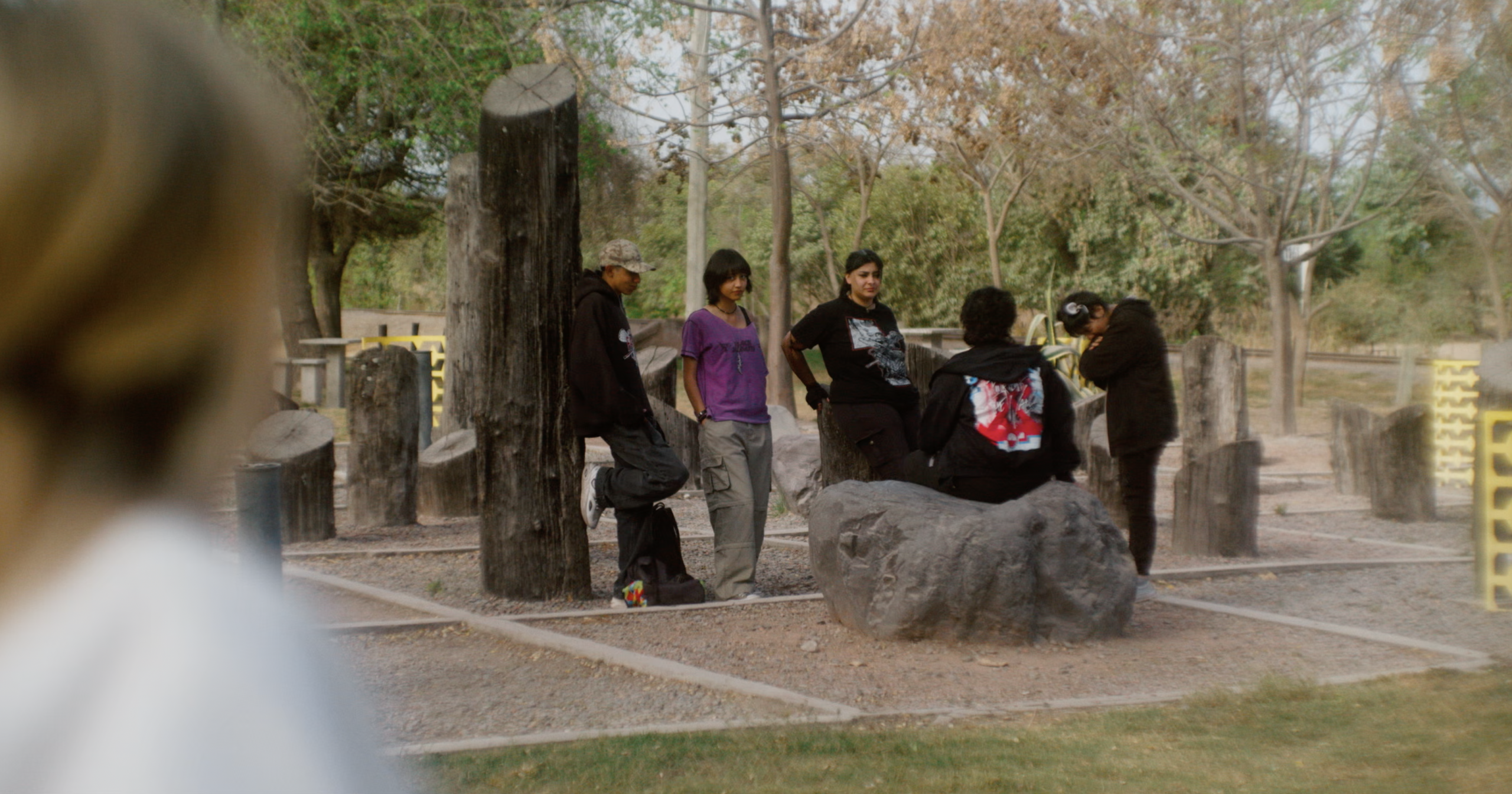
La Cerrillana is most successful in its approach to storytelling. There's very little dialogue (and what is spoken is often only barely audible), forcing the viewer gradually understand our protagonist's emotional struggle. This approach also, perhaps, allows the short to convey a relationship between a mother and her trans son without having to work out the specifics of exactly what has or hasn't been said between them. More importantly, we don't have a sense of why exactly the son is refusing to talk to the mother besides a general sense of nonacceptance. This is okay, especially as there's a sweetness that progresses, but by taking the mother's perspective and avoiding subjecting her to too much judgement, the son becomes more of an idea than a character. That said, the emotional core carries through.
Eva
Directed by William Reyes
Honduras 🇭🇳/Colombia 🇨🇴
Eva was one of my biggest surprises of the festival. I didn't have low expectations, but I certainly haven't seen many Honduran films in my life, and I'm always a little uneasy about dramas following queer and trans characters. Similar to my reservations going into Espina or even my above feelings regarding Mistura, it's just so easy for a well-meaning film about marginalized communities to go sideways—either out of ignorance or oversimplification employed in order to make the audience feel something. Eva is not one of these films.
The movie is anchored by Endry Cardeño, a trans Colombian actress who has been working for 20 years since her start in the telenovela Los Reyes at a time where very few films would feature trans characters played by trans actors, let alone a major character in a series that offers as many opportunities for comedy as melodrama. In Eva, though, Cardeño is almost exclusively working her dramatic chops, and she is endlessly entrancing. Eva is a single mother with a complicated relationship to her barely-grown up son Gustavo (Jancel Romero). Both mother and son have to face a mountainous grief that no one could have expected, but that also puts both of their lives in stasis emotionally and economically. Eva succeeds at just being a really strong and compelling adult drama (which we have far too few of these days). Symbolism is secondary to character, and there is so much meaty character work for both actors—but Cardeño in particular—to work through. Parenthood, the working class struggle, inter-generational trauma, and gender roles within the family unit are all pieces of this movie, but again, the real anchor is in Eva herself, navigating the expectations of her as a mother and provider, while deftly including how being trans may or may not add further wrinkles to these expectations.
There are also some very inspired moments of cinematography. Color is especially important, subtly utilizing cold or warm tones depending on whether characters feel isolated or connected. Light is additionally used well to accentuate silhouettes, including Eva's fluid movements when she leads her dance classes and is briefly liberated from the outside world. Eva is a moving family drama with a remarkable leading performance—the type that should be remembered fondly for years to come.
I Am Frankelda/Soy Frankelda
Directed by Arturo Ambriz, Roy Ambriz, and Mireya Mendoza
Mexico 🇲🇽
I have been eager to see I Am Frankelda—based on a five-episode HBO series—since reviewing the animation studio's excellent series Women Wearing Shoulder Pads last year. I've never seen the original Frankelda series, but the work in Women Wearing Shoulder Pads was staggeringly good, and I was excited to learn that I Am Frankelda would be Mexico's first stop-motion animated feature film. Naturally, this was one of the watches I was most anticipating during the festival.
I Am Frankelda is a maximalist all-ages animated film that could use a little more space to hold all of its ingredients. Animation-wise, I have nothing but good things to say. Cinema Fantasma has produced some of the most exciting animation I've seen in a long time, and what I appreciate is that their style is not beholden to the rules. There are sequences in I Am Frankelda where you are very aware you're looking at a stop motion animation set, but that never dampens the magic. The production design is vibrant, weird, and so, so textured. These animators aren't afraid to work with materials like tinsel that are hard to manage for consistency, and the subtle jerkiness of some of the motion only adds to the charm. They also aren't afraid to experiment with different animation styles (I would quibble that by technicality, this is not a fully stop-motion feature, as has been advertised, but that doesn't take away from the work). A climactic sequence utilizes animated paintings—sort of like Loving Vincent—that are stunning.
But Frankelda is weighed down not by the excess of its visuals, but by the excess of the plot. Prequel syndrome is abound here, which is frustrating as the movie is setting up a series that isn't particularly long to begin with. There is simply too much lore to keep track of! (I chuckled at one point where the movie sort of uses the Tenet method of dialogue, telling the viewer some version of "Don't think too hard about it, just experience it.) I would be fine letting it wash over me if it wasn't moving at such a breakneck speed, rushing past key emotional moments, and leaving most of the songs out of place. (Yes, this is also a musical.)
And, yet.... this is such a visually stunning piece that I have to recommend watching it when you have the chance. The worldbuilding is delightful, and Frankelda is fierce Mary Shelley-inspired protagonist. The pieces are all so wonderful, I wished I could sit with them more. I hope viewers sit with Frankelda soon when the movie drops on Netflix this Summer. Even better would be if Netflix gave the movie the theatrical run its visuals are due.
SHORT: Nativity Scene/Presépio
Directed by Felipe Bibian
Brazil 🇧🇷
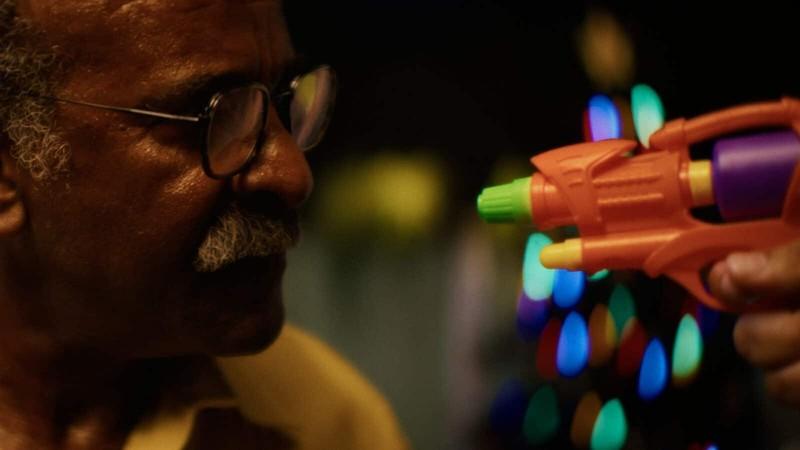
On Sunday, I had a single, heavier screening, starting with the short Nativity Scene starring seasoned actor Wilson Rabelo (who I immediately recognized from my recent dive into Kleber Mendonça Filho's films). Nativity Scene appropriately takes place on Christmas as several generations of a family gather and exchange their Secret Santa gifts. There are two threads in the short: The first thread is the introduction to members of the family through montages of fictional archival film, including home videos, social media videos, etc. The second thread is specific to Rabelo's character, Dejair, the patriarch of the family and a former freedom fighter during the dictatorship. A small dispute between Dejair and his son explores political differences between generations. Where this short is particularly compelling is in how it addresses these differences. This isn't about family members trying to see another's point of view, but about future generations forgetting the past, and how that disconnection has real weight in how the future is built—and whether past mistakes are made once again.
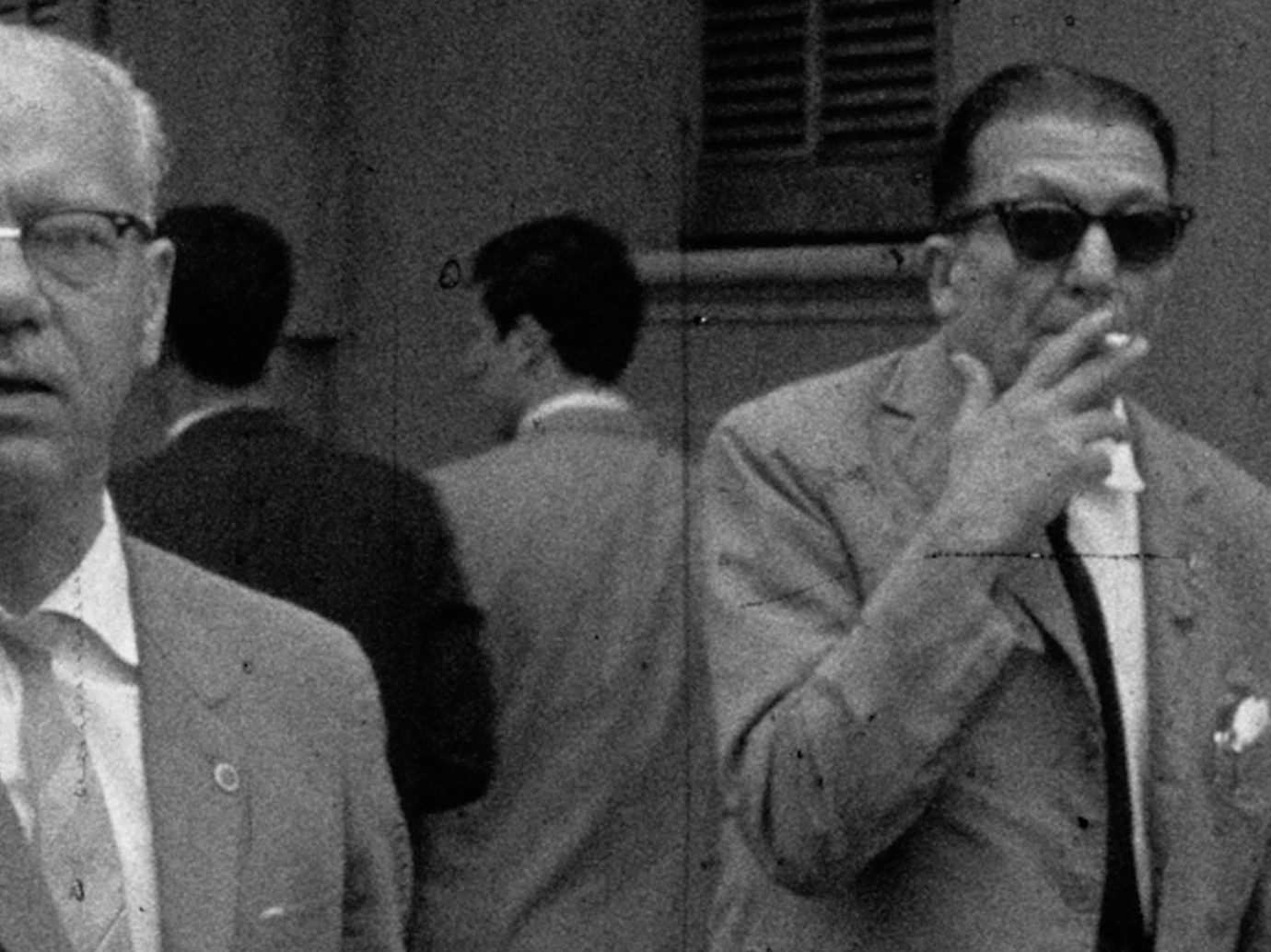
Under the Flags, the Sun/Bajo las banderas el sol
Directed by Juanjo Pereira
Paraguay 🇵🇾/Argentina 🇦🇷
Under the Flags, the Sun immediately caught my attention for its historical significance: This documentary is comprised of rare, recovered archival footage from Alfredo Stroessner's dictatorship spanning 35 years—the longest in South American history, and a key influence in Operation Condor and the continent-wide state-sanctioned violence that ensued (backed and funded by the U.S.). Director Juanjo Pereira isn't interested in creating a straightforward, informative documentary using this footage, though, and the result is something more experimental. (It reminded me of the recent Palestinian documentary A Fidai Film, which similarly experiments with rare archival footage to interrogate the violence of a particular period.)
There is a lot to digest from the documentary in terms of information load, but even with the experimental approach, I still felt the historical retelling overwhelmed any ideas conveyed by how the footage is presented. But the footage is nonetheless striking—and I am a sucker for any exploration of what it means to keep an archive. In addition to footage filmed in Paraguay, the documentary also includes media snippets from around the world, capturing how the Global North viewed and engaged with the terror Paraguayans faced. The anthropological, removed tone of this international news footage is damning, and given Stroessner's political party (The Colorado Party) has still maintained power, it's a further indictment of how quickly extreme acts of state terror are forgotten as soon as it goes back to operating only in the dark. As the film covers the coup that finally removed Stroessner, I had a thought I've been having far too often lately, in thinking about historic dictatorships and the fascism currently running our country: Dictatorships like Stroessner's were ended by the betrayal of peers, not by the power of the opposition; by disagreement over the extremity of the leader, but not necessarily over the values. There is still such a far way to go to overcome these reactionary values and bloodthirst that have never really been overthrown, only shoved under the rug. It's not a defeatist thought, but by the time I finished the film, it certainly was a troubling one.
Only one more dispatch to go! It's been an incredible time for the festival, and I can't wait to wrap up my experience with y'all. ❀