
CLFF #6: Runa Simi
Plus one short!

Yesterday I took advantage of the beautiful day in Chicago and ended up having quite the lovely solo date leading into my Chicago Latino Film Fest screening. After spending a couple hours in my favorite local park enjoying a sandwich under a tree and writing yesterday's dispatch, I went down to the lakefront off of Diversey a couple hours before showtime. There's nothing better to my mind than taking in the late afternoon sun and breeze while sitting alongside the lake. After listening to the waves for a bit (and spotting a pair of Common mersangers diving into the water), I read another chapter of John King's Magical Reels: A History of Cinema in Latin America.
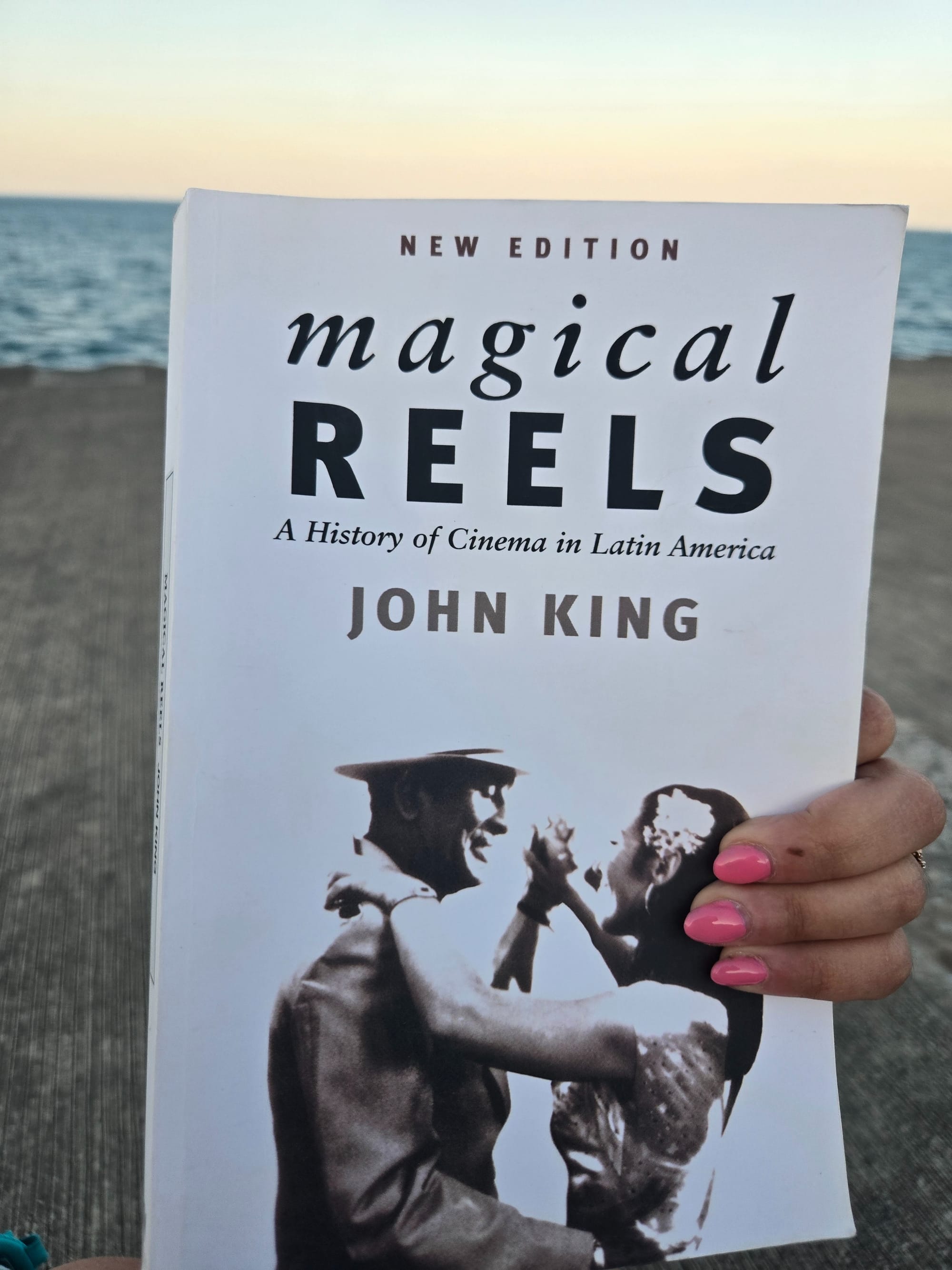
As the sun set with a drop in temperature about an hour before my movie, I decided to head to the Landmark early and had myself a cocktail at the lounge while breaking into the next chapter of the book. All in all, a pretty lovely day that was followed by an excellent screening.
SHORT: Rodrigo Branquias
Directed by Andres Guevara Espinosa
Colombia 🇨🇴
The 16-minute Colombian short Rodrigo Branquias was cute, though oriented to a much younger audience than the adults that populated the 8pm showtime. The short is most unique for capturing the island of San Andrés, some of the Afro-carribbean community that resides there, and including dialogue in the San Andrés–Providencia Creole. The young, titular Rodrigo Branquias wants to enter a freediving contest, but his mother—holding onto trauma related to the sea—forbids him from going into the water. This plot and some use of fantasy has the short toying with an inverse-Little Mermaid situation, but only half-heartedly. It is a undoubtedly sweet short that I could've imagined seeing as an interstitial showing on Disney Channel growing up, but as an adult, I felt like I was watching a tourism commercial. I was interested in exploring how someone whose life was upended by the sea might handle remediating those feelings when the sea is also, in part, home. It is a very persuasive tourism commercial, though (those coral reefs look gorgeous) and the sheer, playful determination of Rodrigo is undeniably heartwarming.
Runa Simi
Directed by Augusto Zegarra
Peru 🇵🇪
In a blog post from a week-and-a-half ago, I sung the praises of Vicky Osterweil's new book, The Extended Universe: How Disney Killed the Movies and Took Over the World. In talking about the book, I highlighted how it melds together a lot of my interests, particularly looking at how movies are funded and distributed, and particularly how politics directly and indirectly influence these outcomes.
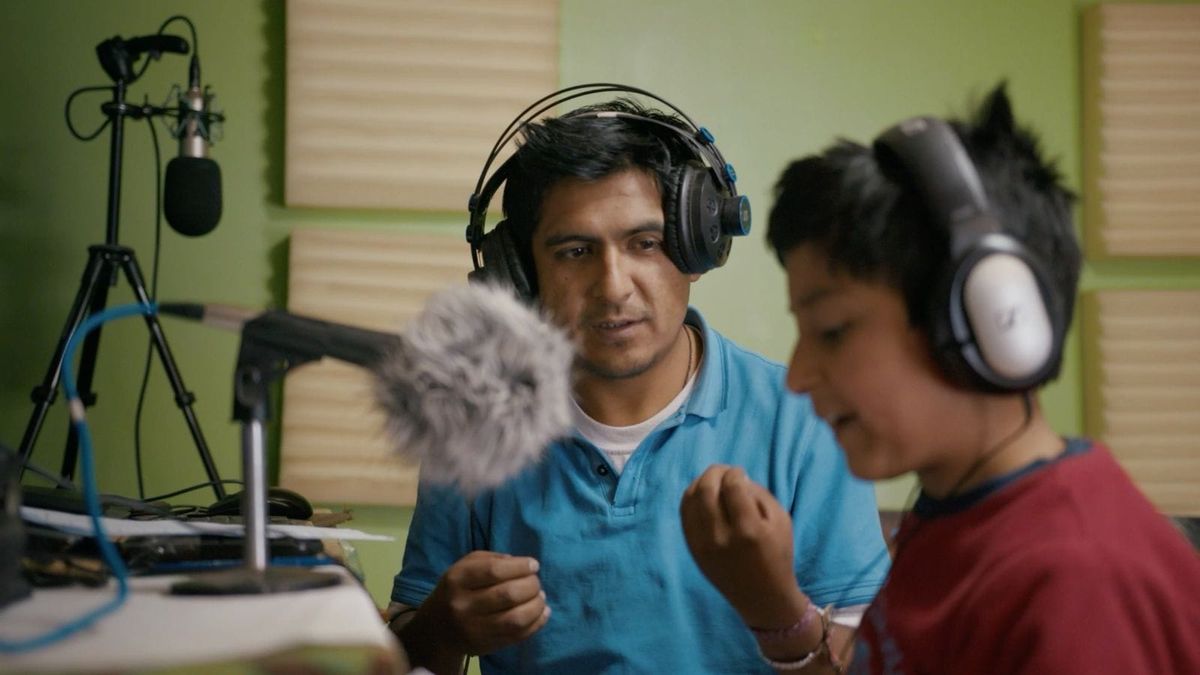
Augusto Zegarra's documentary Runa Simi is a key cinematic companion piece to Osterweil's book—and really, to all that has been percolating in my mind about cinema. Since 2017, Zegarra has been following Fernando Valencia, a Cusco, Peru-based father determined to keep the Quechua Indigenous language alive by producing dubbed clips of popular films such as Star Wars, Ice Age, and—the main subject of this documentary—Disney's The Lion King. Valencia's intentions are as noble as you might assume. He learned Quechua while growing up in a rural community and saw as he got older how the language was marginalized by the larger Spanish-speaking population. Generations even younger than Valencia aren't learning the language at all, despite it being the most commonly spoken Indigenous language across all of the Americas (there is an estimated 10 million speakers). Though Disney has arguably the most significant global reach of any major film company and has released dubbed versions of its films in as many as 40-50 languages, Valencia can't get any representative from the company and any of its various divisions on the line. Additionally, while the documentary Runa Simi can screen commercially in the U.S. despite including clips and songs from The Lion King, copyright law has prevented the movie from being able to legally screen commercially in its home country of Peru. (I'm telling you, you really should read The Extended Universe.)
This story is compelling enough, but I am a staunch believer that a documentary can't rest on the laurels of an interesting story. What excites me most about Runa Simi is the filmmaking. Valencia's story on its own could be reduced to a feel-good human interest story: A remarkable individual (you know I hate that trope) persists in a DIY project with the help of his community. Zegarra's eye as a documentarian allows the greater reality to bleed through without overwhelming our central subject. This is a movie about the remnants of colonialism that maintain a stranglehold on Peru, whether gradually erasing Quechan communities, the bureaucracy that allows external entities to dictate the economic activity of the country, or the aftermath of austerity (does austerity ever end?) that stifles individual economic mobility. It is worth mentioning that Valencia and the collaborators he recruits to dub The Lion King are extremely talented—yes, even by professional measures. The opening scene shows Valencia directing his son Dylan in reading lines as the child Simba, and it is immediately clear that he has a legitimate talent for voice acting and directing. It is incredibly damning that someone of his talents cannot move out of the class of "Content Creator," and a reminder that self-initiative isn't exactly valued by capitalism, as much as we're told otherwise.
But Zegarra also captures what it means to have documents that preserve a culture. If a community finds resonance in The Lion King that reflects their experience (understandable, given that Disney doesn't mind co-opting Indigenous cultures), why shouldn't it belong to them in some way? Why can't this object created by Disney to enchant children across the globe for generations (so much so, that they made a shot-for-shot remake!) do the same for Quechan communities? Regardless of Disney's role in all of this, Valencia's belief in preserving the culture, and how that belief invigorates a community that hasn't otherwise felt free to speak the language, seamlessly weaves into the fabric of the film and its greater ideas. Zegarra's hand is light—you can see the camera give the subjects space when needed, and Valencia is such an energetic figure, that he easily drives his own narrative without the influence of a camera on him. It's all handled deftly, and you walk away being immersed in both the personal and the political, the life-affirming and the rage-against-the-system all at once.
As we enter the weekend, I'm likely taking another break from CLFF tonight, but will be back with three screenings on Saturday, and a couple more movies after that before the festival ends. ❀