
CLFF #4: Espina, Melodrama
Plus two shorts screened at CLFF.

It is a beautiful, beautiful Tuesday in Chicago—one of those days that makes all the nightmares seem a little less hopeless, and on a molecular level, one of those days that has me contemplating getting some happy hour $1 oysters before my Chicago Latino Film Fest screening tonight....
But before I get too ahead of myself, let's talk about last night: I saw two features (and two shorts preceding each respective film) at CLFF last night, and it was probably my favorite night of watches so far at the fest. Let's get into it!
SHORT: I F*cking Hate You!/¡Cómo te odio!
Directed by Gabriela Paciel
Mexico 🇲🇽/ USA 🇺🇸
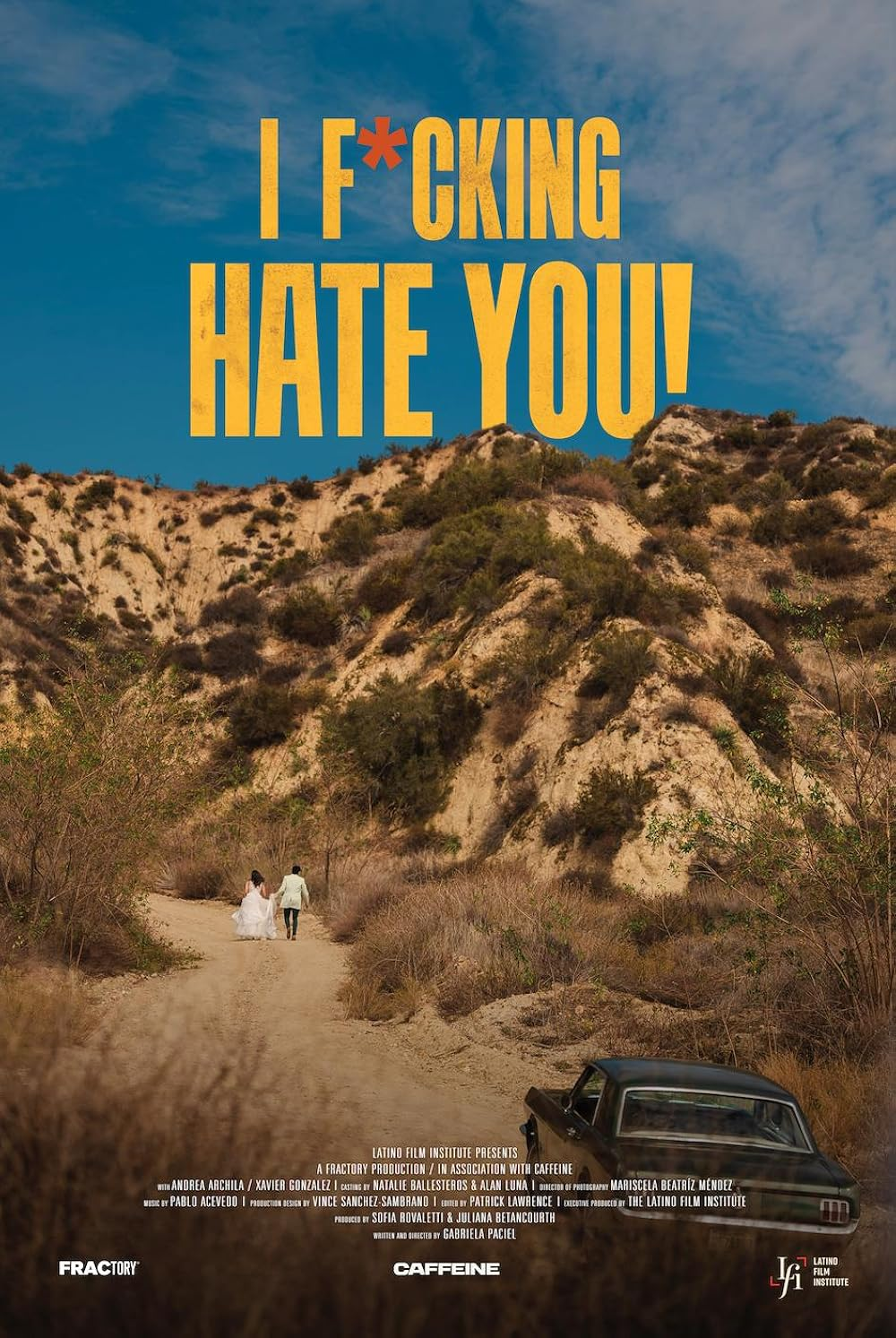
Gabriela Paciel's I F*cking Hate You! is an English-language short about sibling resentment and the lingering presence of a deceased parent. Despite the angry title and tension between the siblings, this is a very cute, charming short with humor (including a well-executed sight gag involving a tire) and a surprising amount of choreographed action. I found the plot secondary to the sort of exercise a short affords a filmmaker—a chance to gain experience with different staging and genre. In this case, the fight choreography and the desert photography are the real stars, though I'd love to see how some of the dynamics between these siblings can be explored when stretched into a feature.
Espina
Directed by Daniel Poler
Panama 🇵🇦
For those who have known me long enough or at least know me outside of my writing, you know that I freelance as an accessibility consultant. I first got involved with accessibility from an audience experience perspective around 2017 while working for an event organization, and since, have explored my personal relationship to disability and gotten involved in disability and accessibility advocacy. I am certainly not an expert—my disabilities and health experiences are mostly invisible. But I do take an interest in how disability is portrayed in media (in short: Usually? Poorly!). It made sense then that Daniel Poler's Espina caught my eye as I was planning my CLFF schedule.
Espina is based on and stars Poler's childhood friend Jonathan Benaim. (Both Poler and Benaim grew up together in Venezuela.) Benaim's has Periventricular Leukomalacia caused by medical malpractice, which has resulted in partial paralysis since infancy. Espina gives Benaim a late-20s coming-of-age adventure without sacrificing his real-life sense-of-humor about his disability. On paper, a movie about a disabled 20-something-year-old leaving his family for the first time to go on a trip of self-discovery with two hired caretakers sounds like it could easily travel in the direction of inspiration-porn or at least other-ing voyeurism, but Espina always keeps Benaim's point-of-view centered, presented matter-of-factly with little attention paid to making any cases one way or the other to the audience (the closest the film comes is through interstitial text that is humorous but a touch too explanatory of some of the film's most provocative moments).
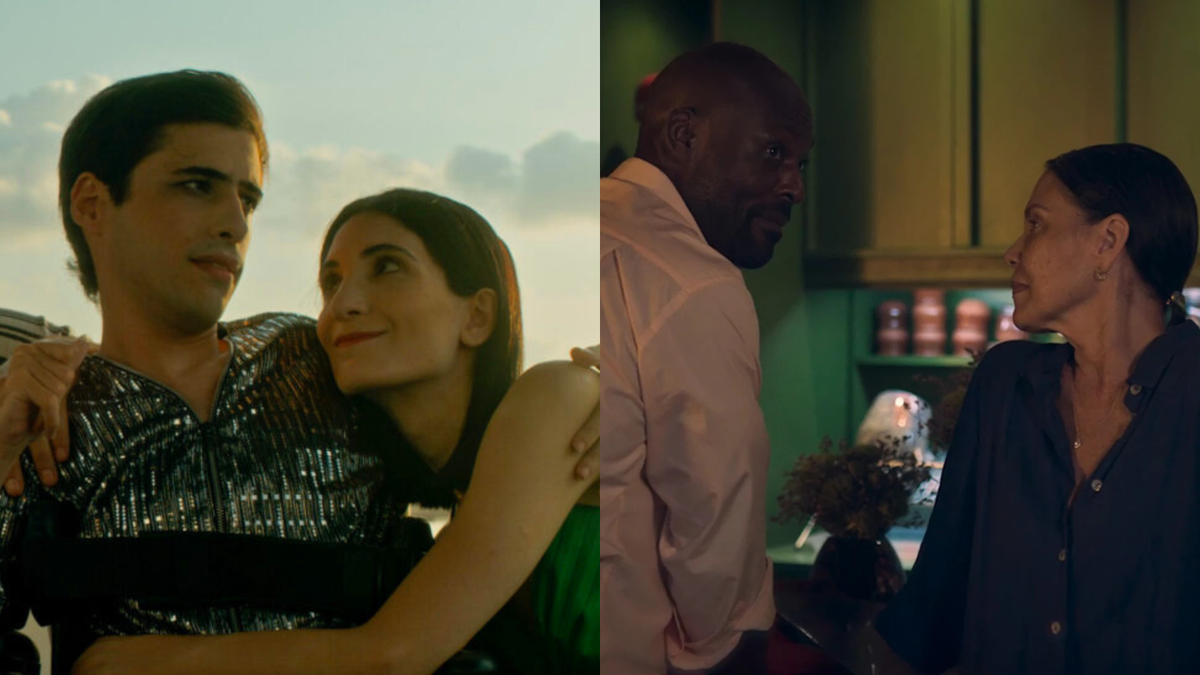
Jonathan enlists his driver Eduardo (Aarón Díaz) and new Mexican acquaintance Angela (Paulina Mondragón) to support a trip to Panama to confront the doctor that ruined his life at birth. Espina never tries to pretend that Jonathan's physical disability doesn't limit him (there's no "my disability is actually my superpower!" belief system here), but the movie also understands that limitations don't necessarily need to come with shame or at the complete expense of an experienced life. The movie is straightforward without pandering about how much of the embarrassment of disability comes from how disability is treated socially and structurally: The medical and physical limitations of having a disability would be less painful if there wasn't the unspoken financial tax imposed on disability and the emotional tax imposed by opportunists more interested in selling miracle cures than providing real help. Sexuality and the body are treated with similar nuance; Jonathan is sexually inexperienced because the 24/7 oversight of his family leaves him socially inexperience, but the only time his body is treated with shame or disgust is by airport security. Angela, on the other hand, never shows discomfort in caretaking for Jonathan, even as most of the tasks asked of her are a first. Her only discomfort comes from making sure she never puts Jonathan in a position of discomfort, and the movie does a really fantastic job showing the mutual understanding and respect that comes with learning how to physically care for someone.
Perhaps most refreshing in this film is how Eduardo and Angela have their own quarter-life coming-of-age arcs that are completely independent from Jonathan's disability. These are three people with their own shit and neutral morality building friendships with one another and also taking personal moments for themselves during this vacation. The movie avoids tropes about learning how to appreciate life from a disabled person's perspective, and instead meets all the characters where they are.
Espina doesn't reinvent the wheel when it comes to characters gaining new life experiences while traveling outside of their isolated worlds, but it's a sweet, funny, and vibrantly shot film that has one of the more candid depictions of disability you'll find in a film without relying on tired and patronizing tropes.
SHORT: A Peculiar Morning
Directed by Emmylou Díaz
USA 🇺🇸
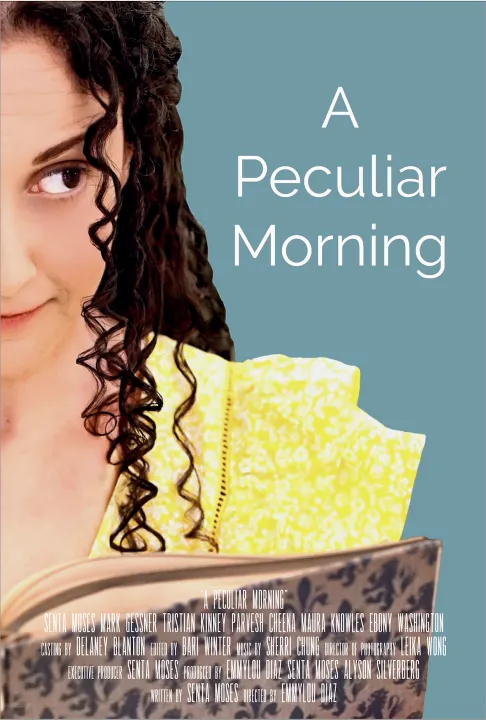
"Sweet" is a word that kept coming up in my head during last night's screenings, and no screening embodied that word more than A Peculiar Morning, directed by TV veteran Emmylou Díaz and written by character actress and Chicago native Senta Moses. Moses additionally stars in the comedic short, playing a recent widow navigating mild agoraphobia as she grieves. Her friends are her household objects, including a coffeemaker, lamp, and alarm clock that speak and shake as they encourage her to travel outside of her comfort zone. As the short progresses, the storybook sweetness also makes direct references to Belle in Disney's Beauty in the Beast, as Moses proclaims wanting to go out and experience "the great wide somewhere," while speaking to her appliances. Finally, the motivation to do so comes in the form of a potential beau who has his own set of anxieties, providing our heroine with the promise of a bright, fairytale future ahead. Is it a happy ending? Perhaps not, but it's an exciting new chapter.
Melodrama
Directed by Andrés Farías
Dominican Republic 🇩🇴
Andrés Farías' Melodrama—which had its world premiere only days before arriving in Chicago—is one of the most exciting films I've seen so far at the festival. So exciting, that I'm hesitant to give too much away as I sincerely hope this movie finds a wider festival presence and an eventual release that includes substantial distribution in the U.S. (so rarely given to Latin American films, and especially ones outside of Argentina, Brazil, and sometimes Mexico).
Melodrama could be best described as a contemporary answer to Todd Haynes' Far From Heaven, right down to the Sirkian influences that inform the aesthetic style and tone. While Haynes' 2002 film takes the form of a period piece exploring an interracial affair in Jim Crow-America, Melodrama takes place in the present-day Dominican Republic, as older widow Sonia (played by dancer and first-time actress Mercedes Morales) falls in love with younger Haitian refugee and construction worker Aimé (Jimmy Jean-Louis, whose performance is as romantic and delicate as Dennis Haybert's in Haynes' film).
Melodrama is populated with color and texture in the production design, and filled with heightened sequences from Sonia's perspective (Farías said in the Q&A that the film is intentionally ambiguous in how much of what we see is reality). I especially love how Farías captures bodies in motion and accentuates the shape of bodies against each other and against the architecture of Sonia's apartment.
But what really elevates these details beyond aesthetics is Rey Andújar's involvement in the script. Andújar, a Chicago-based novelist, playwright, screenwriter, cultural consultant, and teacher (who was sitting in the seat closest to me during the screening, though I did not know this until the Q&A started) is credited with developing Aimé's character while collaborating with co-writers Farías and Julia Scrive-Loyer. Andújar's contributions ensure that Aimé is much more than a symbol of horrific anti-immigrant sentiment and state violence (treatment of Haitians in the Dominican Republic is not dissimilar from the escalated attacks we've seen from ICE in the last year), but as a man of complexity and poetry. It doesn't change the fact that we are still ultimately seeing the film through the eyes of Sonia, a woman with more social and economic power than Aimé, but it prevents him from being purely an object or idea in Sonia's life.
But Andújar's most successful contribution—and one that could easily go awry in other hands—is the romance he inflects into the dialogue, including an original poem Aimé recites in the film's final act, "Debajo de ti." This isn't hacky lit major poetry, but a genuine work (in both Spanish and its English translation) that solidifies Melodrama's place as a great—and tragic—romance.
I'm about halfway through my planned schedule for CLFF—so stay tuned because there are plenty more films to cover! See you at the movies...❀