
Chicago Palestine Film Fest: Sink, Thank You For Banking With Us
Plus the shorts "Don't Be Long, Little Bird" and "What a Pattern Tells Us"

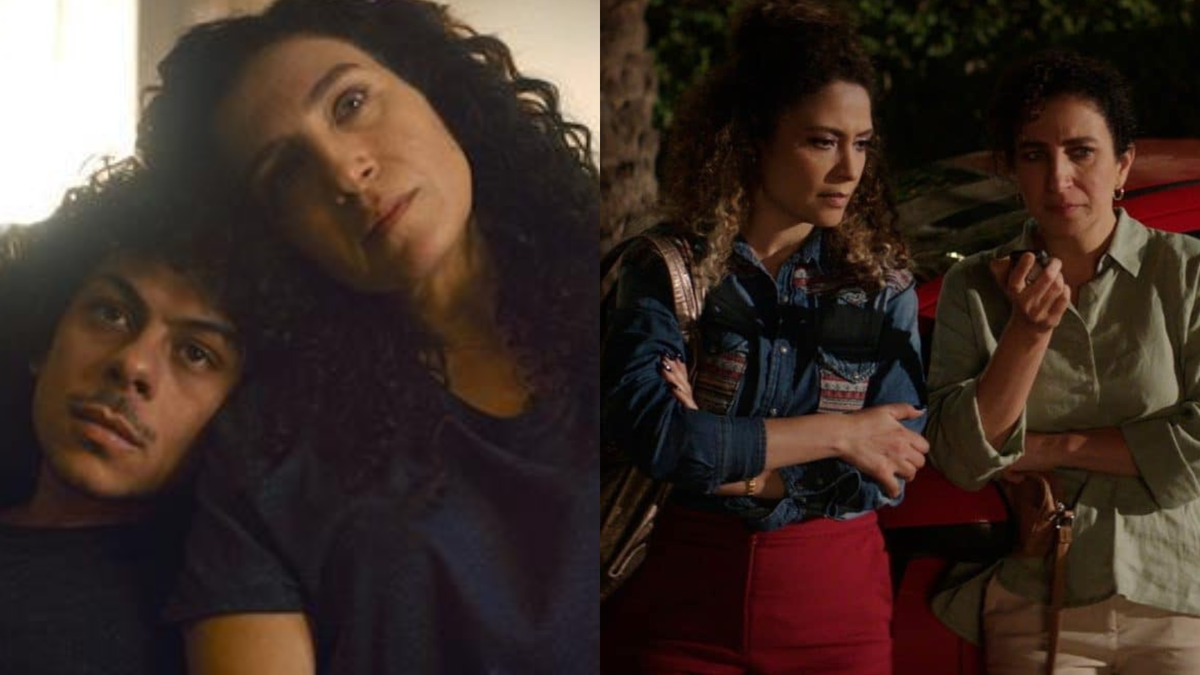
As mentioned in yesterday's post, last night I spent some time at the Siskel Film Center for the 25th Annual Chicago Palestine Film Festival. April is always a crazy (and exciting!) festival season for Chicago, so while I'm excited to spend most of the month at the Chicago Latino Film Festival, I couldn't go without catching at least a few of the CPFF offerings. Last night I caught two films starring Clara Khoury (star of last year's The Voice of Hind Rajab), both preceded by a short (one of which also featured Khoury).
SHORT: Don't Be Long, Little Bird
Directed by Reem Jubran
USA 🇺🇸 / Palestine 🇵🇸
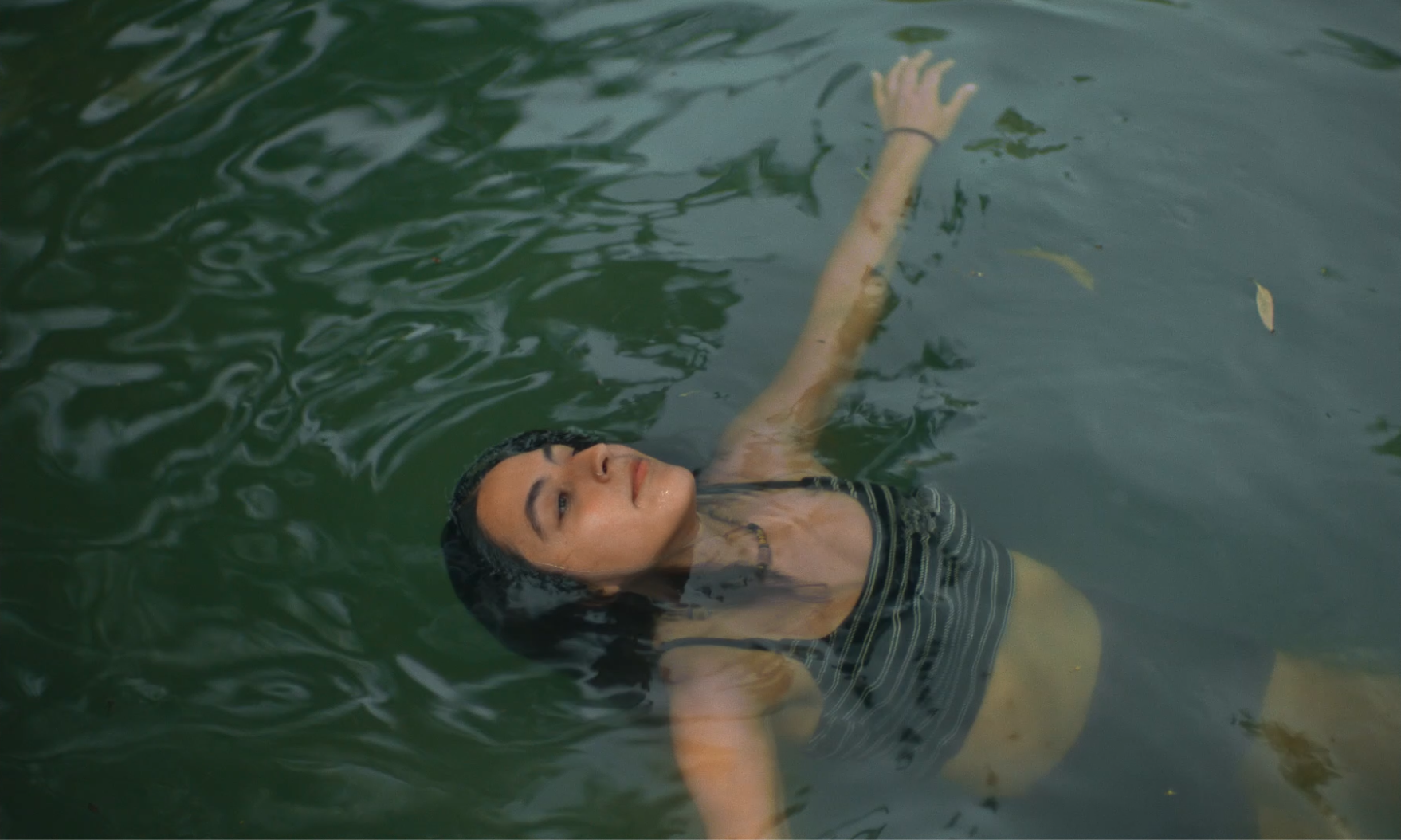
The night began with an excellent short from recent UCLA grad Reem Jubran. Don't Be Long, Little Bird was Jubran's thesis film, and though it was largely rejected from the festival circuit, Jubran was one of the winners of the Gotham Institute's Focus Features & JetBlue Student Short Film Showcase. It's a well-deserved recognition that speaks to her promise as an emerging filmmaker, and that also, thankfully, makes her beautiful short film accessible to a wide audience via Focus Features' YouTube channel. In a post-screening Q&A, Jubran talked about how important it was for her to show a piece of Palestine that existed before the Nakba in 1948. In Don't Be Long, Little Bird, Rima (Banna Bazzarie) finds herself in the middle of an argument with her mother (Khoury) while on a vacation in Ojai, California. Seeking escape from the matriarch, Rima takes a swim that transports her to 1930s Palestine, where she meets her namesake great-grandmother. As Rima sees her grandmother at her age—an age of youth, restlessness, and anxiety about familial expectations—we follow her on a brief and folkloric journey of ancestral memory, womanhood, and reconciliation.
I highly recommend you take some time to watch the short here.
Sink
Directed by Zain Duraie
Jordan 🇯🇴
Don't Be Long, Little Bird was the perfect primer for an evening of stories centered on the family unit. In Zain Duraie's feature debut Sink, we look at the relationship between mother and son. Nadia (Khoury) starts to possess concerns about her eldest son Basil (Mohammed Nizar) and his notably declining mental health as he approaches the end of high school.
I'll be honest: I loved this movie, but I love it on terms that I'm not sure were the film's intent. What could easily be a clichéd weepy about undefined mental illness and the plight of a mother felt trickier and more complex in Duraie's take on this narrative. Before we are even introduced to Basil's shaky mental health, we instead see him fill the role of Nadia's companion (though there is a father and husband in the picture, this detail isn't entirely clear until at least 10 minutes in). Using the term "emotional incest," can feel provocative, but I was fascinated by the particulars of Nadia and Basil's relationship. Despite being a parent to three children, Nadia seems unconfident as a mother, and her loneliness is palpable in early scenes. As Basil's state of mind gradually erodes, Nadia doesn't necessarily provide him with mothering as much as she tries to hold onto him as her anchor. In my view, this is far from an after-school special, but a study of a particular mother/son relationship—and the consequences of when boundaries and emotional regulation are absent in a relationship. I think this is a strong debut, and appreciate Duraie's experiments with camera angles to reinforce the claustrophobia of the family environment. The third act is when we dip the most into tired melodrama—this is a dynamic that is challenging to resolve in a film, and Duraie leans toward closure over ambiguity, but overall, this was a strong psychological drama with a great, aching performance from Khoury.
SHORT: What a Pattern Tells Us
Directed by Bayan Abuta'ema
Jordan 🇯🇴 / Palestine 🇵🇸
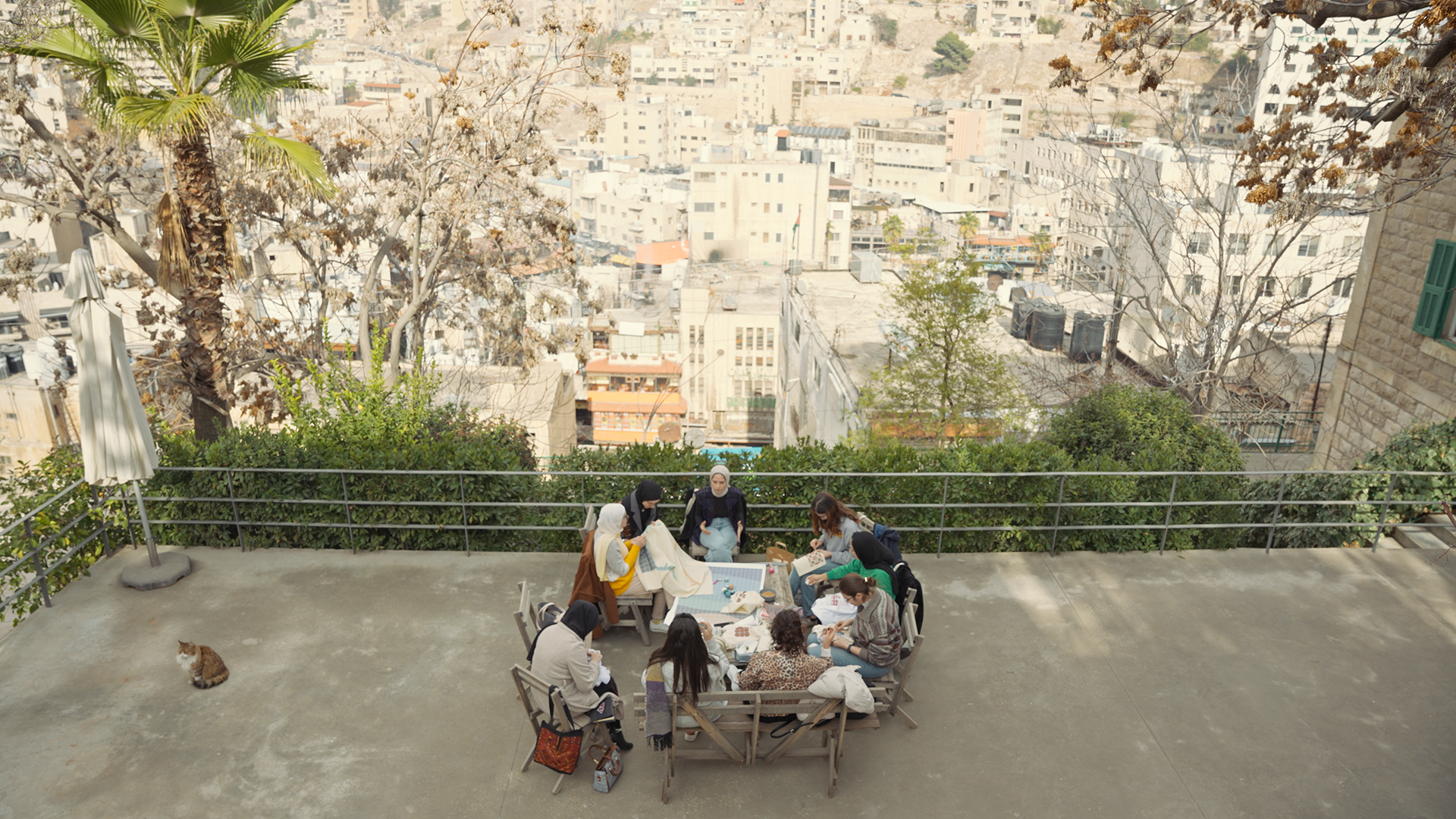
The documentary short preceding the final film of the evening focused on the tradition of Palestinian embroidery (in the U.S., you'll sometimes hear the Arabic word for embroidery, "tatreez," used to distinguish the Palestinian tradition of the craft). It follows multiple generations of women who are determined to keep tatreez alive, particularly as Israeli occupiers steal or destroy Palestinian art, clothing, and linens in an attempt to erase the culture. But the documentary also touches upon tatreez as a financial means of supporting families as assaults on Palestine make survival difficult. As one embroiderer notes, tatreez is the most popular as it has ever as individuals in support of Palestinians take a greater interest in the culture and these embroidered works as a symbol of the Palestinian people. It's a sweet short that shows women in community and joy in the midst of occupation.
Thank You For Banking With Us!
Directed by Laila Abbas
Palestine 🇵🇸
Laila Abbas' Thank You For Banking With Us! is a delightful comedy-drama that manages to cover several social issues at once without losing focus of the relationship at its center. Mariam (our third Khoury performance) and Noura (a phenomenal Yasmine Al Massri) are estranged sisters trying to determine how to secure their late father's money before their brother (and other male relatives) try to stake a claim on the dead man's wealth and possessions. Mariam and Noura are of different social classes, relationship statuses, and involvement in their father's life following a stroke several years prior—all issues that come to a head as they become enmeshed in each other's life over a 24-hour period.
Patriarchal expectations recur and are challenged throughout the film, but most interesting to me is how the film balances the characters' problems across three tiers, experimenting with how each tier holds weight against the other: There's the personal-tier—dealing with the loss of a parent, navigating a failed marriage, raising children; there's what I can best describe as a sort of "neoliberal" social tier—issues like classism and misogyny that aren't necessarily coming at the expense of rights, but that do impact social mobility; and then there's the ever-present existential tier—the Israeli occupation and genocide of Palestinians.
With a threat as heavy as gunfire and bombs, these other issues can feel trivial. What I am most impressed by is how Abbas doesn't minimize problems like dissolving a marriage (at one point Khoury delivers sarcastically delivers the line, "Should I wait for Palestine to be free to get a divorce?" with comic precision) or breaking under the foot of contemporary capitalism (the movie draws smart comparisons between ownership of labor and ownership of land), but never loses sight of the monumental threats to survival. How much money does it take to be free? And what or who are you free from? These are good questions raised by Abbas' film, deftly handled through richly-written, relatable characters, and a healthy dose of humor.
On the docket tonight is a Chilean thriller at the Chicago Latino Film Fest and another screening from the Palestine Film Fest (the latter includes a plot about pigeons, which if you know me, you know I'm excited about). More soon. ❀