
CLFF #1: It Would Be Night in Caracas/Aún es de noche en Caracas
A dispatch from Opening Night of the Chicago Latino Film Festival

Spring is here in Chicago. The cherry blossoms are in bloom, the April showers are showering, and gradually, the sun is coming out to pull us all out of our seasonal depression (and into the normal "oh god everything is terrible" depression). Last night, a day of on-and-off downpours, thick humidity, and a drop in temperature cast a mist over the skyline that drifted north to the intersection of Clark and Diversey, floating past the Landmark Century Centre where the 42nd Chicago Latino Film Festival was celebrating its opening night.
The night kicked off with a pre-screening celebration in the bar and lounge portion of the Landmark Century Cinema, including a DJ and catering provided by Sinhá Elegant Brazilian Cuisine. No one can go off into an opening screening in a bad mood when you start with a plate that includes basmati rice and beans, collard greens, plantains, Brazilian meatballs, and yucca croquettes (this one I didn't quite hear when moving down the buffet, but it's my best guess based on Sinhá's menu, and regardless—hell, it was delicious). The bar on the other hand presented a bit of long waits and chaos, but truth-be-told, I was probably better off settling for a regular concessions lemonade than downing a cocktail or pint of Modelo. After all, I'm here for the movie theater experience.
And with that in mind, let's get into my first CLFF screening dispatch...
It Would Be Night in Caracas/Aún es de noche en Caracas
Directed by Mariana Rondón and Marité Ugás
Venezuela 🇻🇪/Mexico 🇲🇽
There's an unavoidable shadow that traveled beneath the mist coming into this year's festival: It is the first CLFF since the administration enacted "Operation Midway Blitz" and terrorized immigrant communities in the city, particularly anyone Brown or profiled as Latine. But even prior to Trump's second term, anti-immigrant sentiment has been on a steady uptick since 2022 as thousands of Venezuelans sought refuge in the United States to escape the ever-escalating social and economic crisis in their home country. Instead of providing the refuge promised on the State of Liberty, these migrant populations were treated as disposable political pawns by state and municipal governments (with little help from the Biden administration). Chicago especially received thousands of migrants that this city was—and is—unequipped to help. Now, those communities have only been the subject of further scrutiny as the current administration weaponizes flimsy narratives about Venezuelan gangs infiltrating the country to justify attacking and disappearing communities that never received a lick of help or social support to begin with.
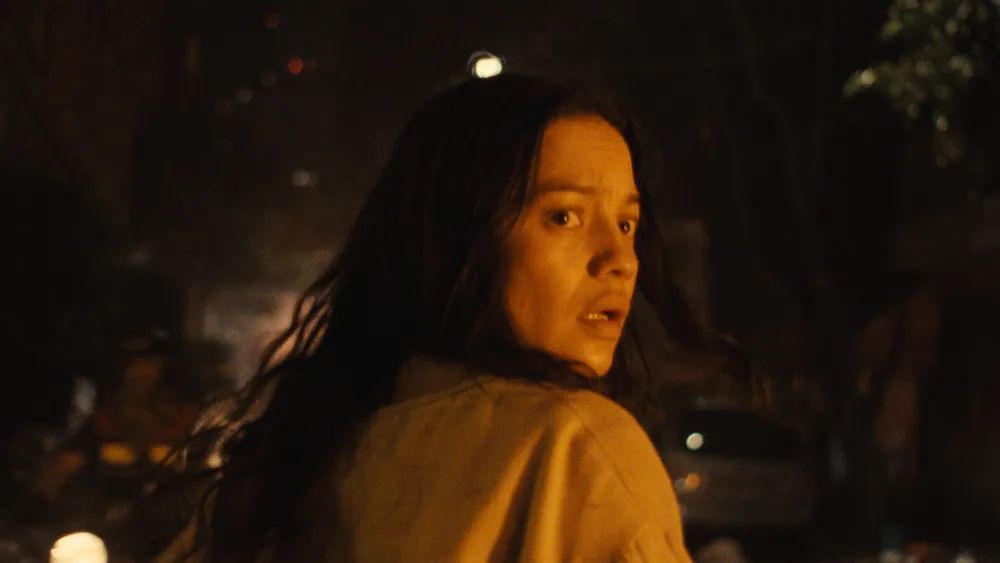
I start with this political context because this year's Chicago Latino Film Festival opened with It Would Be Night in Caracas (Aún es de noche en Caracas), a film about the crisis in Venezuela as it first truly came to a head in 2017. It's a symbolic decision that bridges the recent memory of both Venezuelan and non-Venezuelan Chicago audiences. Based on the 2019 book La hija de la española by Karina Sainz Borgo, It Would Be Night in Caracas is first and foremost about survival by any means—and often how those means are escape. The film follows Adelaida (Colombian actress Natalia Reyes), a writer and journalist struggling to navigate grieving her mother's death while the streets are filled with violence enacted by the state and militant guerilla groups. The apartment Adelaida shared with her mother is soon trespassed and taken over by a group from the "women's front." (The implication is that these groups are weaponizing the crisis to hoard and up-sell resources impacted by shortages.) With her safety immediately threatened and little to keep her tethered to her broken home, Adelaida uses the (convenient) sudden death of her Spanish-born childhood friend and neighbor Aurora to find a way out of the country.
Adelaida is not necessarily politically neutral—if anything, the film takes a pretty firm stance that the state and its systems are the cause and worst perpetrators of all this violence—but her distance from all factions of resistance, whether the far-right militias, the peaceful protestors, or Bolivarian revolutionaries, gives the viewer a relatively neutral point-of-view... for both better or worse.
Long-time collaborators Mariana Rondón and Marité Ugás excel at immersing the viewer in the sheer scale of violence and precarity felt during this period. The sound design especially stands out (surround sound!) with every little echo and reverb carefully calibrated to give the viewer the sensation of proximity. In the post-screening Q&A, Ugás said that one of the aims of the film was to combat the "fragility" of memory by making sure that Venezuelans particularly don't forget what it was like in 2017. Some of those measures include utilizing archival footage from protests and reenactments of documented state violence and extrajudicial killings. (The movie has already been released on Netflix Latin America and has been in the top 10 for the last 2+ weeks.)
At other times, the movie's novel-istic origins become apparent, with flashbacks that feel slight when presented in glimpses connected to the present via match cuts, rather than providing the full access to Adelaida's contemplative state that is presumably accessible in prose. There are powerful ideas here about loss in all of its various forms; short memories of Adelaida's mother symbolize the former vibrancy of Venezuela pre-crisis, allowing us to understand that love for her home country is unceasing, even if that version of home is now gone. But that sense of interiority is often overwhelmed by the exterior forces acting against her.
At one point in the Q&A, the directors talk about how most of the characters we see outside of the state, regardless of their affiliation, are ultimately doing what they think they need to in order to survive. Rondón shared that while developing the film, they posed to themselves the ethical quandary, "If you do anything to survive, does surviving inherently save you?" The conclusion they came to was, no, it doesn't. All you've done is survive.
For those that have lived it, It Would Be Night in Caracas may resonate for its insistence upon memory. For those trying to parse through how we got here or how the countries we call home can be saved—whether Venezuela, the United States, or anywhere where violence systemically takes our streets—those dialogues exist after and outside of the film. The film reminds us that we cannot ignore these circumstances, but we have to decide on our own what to make of them.
It Would Be Night in Caracas has an additional screening with a Q&A to follow on Saturday, April 18, 8:15 PM.
Stay tuned for more of my daily dispatches. Tonight I'll be at the Chicago Palestine Film Festival, but will otherwise be at CLFF almost daily (and will be sharing capsule reviews from both festivals over the next week and a half). ❀