CUT!: The History of Federal Funding, the Future of Film
Those good ole days of indie cinema? They were funded by the government.

Author’s note: Last summer, I began writing a piece for a film-focused outlet on the Trump administration’s NEA and NEH cuts and how they impact the film industry. For a handful of reasons, the piece was dropped by the outlet early this year (the decision was amicable so I am not naming names 🙂). But after several months of research and interviews with several sources, this was not a story I wanted to abandon, and within this story is a bigger picture examination of the independent filmmaking ecosystem.
With fewer limitations, I’ve expanded the piece to include the full history of the NEA’s relationship to the film industry, with research and prep work that entailed poring through xeroxed scans of NEA annual reports and manually inputting over 4,500 media and film grants into a personal database (the NEA only digitized records from 1998 onward). All interviews took place in 2025 (primarily over the summer).
Because of the length of this piece, I am publishing it in two parts (I’ll also publish a version that includes both parts in one, for those who like the flow of a long read).
Lastly, I have made no money from writing this piece. It was a labor of love, but it was a labor. If you read this and enjoy it, please consider sending a tip.
CUT!: The History of Federal Funding & the Future of Film
Part One
Spring 2025
"It was this April Fool’s letter."
Susi Walsh has seen a lot in the 40+ years since she co-founded the Center for Independent Documentary (CID). Based in Newton, Massachusetts, CID supports filmmakers primarily as a creative partner and fiscal sponsor. That latter function has been particularly important for projects driven by public interest, such as unexplored histories that require in-depth research, examinations of social issues that bring forth unheard voices, or cultural documentaries that interrogate the way we move through the world. Fiscal sponsorship alleviates the burden of budget management and fundraising, but it also leverages CID’s nonprofit status, opening up funding streams that aren’t commercially-motivated, such as the umbrella of public funds.
CID helps connect filmmakers of all backgrounds to resources within a funding landscape that was never abundant to begin with and that has only dwindled over time, assisting with paperwork that can be prohibitively time- and resource-intensive. That burden is instead absorbed by the organization; hectic work that requires overseeing multiple projects at once, with grant periods that can span several years.
Naturally, there are challenges to this work. But despite the uphill battle of public funding, what Walsh experienced on April 1, 2025 must’ve been an April Fool’s Day joke: Late at night, an unusual, non-government address emailed Walsh and CID-sponsored filmmakers to notify them that their National Endowment for the Humanities (NEH) grants were unceremoniously terminated. A total of 13 grants were impacted, ranging in size from $75K to $700K. Each project’s respective filmmaker received a separate email. Walsh received all 13.
This was no prank.
It was anticipated that the Trump administration would come after federal arts funding, but there is no precedent for clawbacks of this scale. “[I thought] maybe they’re going to cancel next year’s grants,” says Immy Humes, one of the impacted filmmakers. “They’re going to alter the identity and function of the agency because they wanted to for so long, but it’s not going to be a clawback of money that’s already awarded—of money already planned for and allocated. Instead, it was this April Fool’s letter.”
Though Humes has been making documentaries for over thirty years (her 1991 short “A Little Vicious” was nominated for an Academy Award), the $600K award announced for her documentary on filmmaker Shirley Clarke was her first NEH grant. Because federal arts grants are typically paid out as a reimbursement, the termination arrived before she had received any portion of the award. “When you read the termination letter, it just reads like a joke,” she says. “It's so sloppily, casually, ridiculously written.”
“There's tremendous work that goes into every application,” says Walsh. “And to just see it cast aside—that it didn't even deserve an actual letter, that it should come in the middle of the night and be treated so callously—that was really rather stunning.”
NEH rescissions were closely followed by mass layoffs at the federal agency, leaving grant recipients without their longstanding points-of-contact to lean on throughout the chaos. Truth be told, the NEH doesn’t necessarily bear significant weight in the film community. The humanities are more closely associated with academia, though documentary filmmaking often falls under the NEH umbrella, especially when archival work and oral histories are involved or the subject itself is the humanities. But it wasn’t long after these terminations that the Trump administration turn its sights to the NEH’s sister agency—the National Endowment for the Arts (NEA).
On Friday, May 2, 2025, the NEA sent its own round of late-night grant rescissions mere weeks after the first round of 2025 grants were announced. (These emails, at least, came from a government address.) Some recipients were offered the option to appeal, requiring further paperwork arguing that their proposals aligned with the administration’s new NEA priorities, including projects that “celebrate the 250th anniversary of American independence, foster AI competency, empower houses of worship to serve communities,” and more—a slate of objectives consistent with the administration’s recurrent ideological push against DEI and toward supposedly traditional American values. Impacted organizations had one week to submit their appeal, but because these emails were sent late on a Friday night, many grantees only had five working days to complete the paperwork.
“I had a lot of questions about the next application year and what changes were going to be happening to the NEA,” says Julia Sherman, executive director of the Big Sky Documentary Film Festival in Missoula, Montana. “There was a lot of staff turnover, so our typical contact through the film and media department who had been there for years—as long as I’ve been with the organization—has since moved on. I got a bounce back email.”
The NEA was the third federal cultural grantmaking agency under the Trump administration to terminate awards and reduce operations. Prior to the NEH and NEA cuts, in March 2025, President Trump signed an Executive Order calling for a significant reduction in the Institute of Museum and Library Services’ operations. (Though the IMLS also has less bearing on the film industry, it has been a key supporter of archival initiatives such as the In Frame consortium project.) Last July, the administration passed a rescissions act that eliminated the Corporation for Public Broadcasting's federal support of—an enormous torpedo to public media, including documentaries produced and distributed by PBS. The CPB shut down in January 2026.
🎞️💸🎞️
Independent filmmaking in America has never been easy business, but one could feel nostalgic for the way it seemingly flourished from the 1970s through the 1990s. Take Richard Linklater’s Slacker (1990), for example—long held as an idealistic standard for American independent filmmaking, and for good reason. Almost 35 years after his $23,000 film about Austin, Texas’ social outcasts became a Sundance darling, Linklater now has one Academy Award, six movies in the Criterion Collection, and enough goodwill for Blumhouse to back Merrily We Roll Along, a film Linklater could take 20 years (or more) to make. 1991, the year Slacker came to Sundance, is considered to be a watershed in the festival’s history. It had been six years since Robert Redford’s Sundance Institute took over the U.S. Film and Video Festival in Utah, and this was the first year the festival was officially renamed after the institute. The New York Times wrote about the festival’s investment in films outside of the mainstream, a trend that would burn bright—and fast—as the festival quickly became one of the Big Five festivals of the world, later receiving criticism for an outsized focused on Hollywood and celebrity.
The narrative from the New Hollywood boom of the 70s through the Sundance movement of the 90s tends to focus on incredible, solitary stories like Linklater’s; an underdog with artistic brilliance and a thrifty sensibility succeeds in a way that makes us feel like anyone with a camera can do it. (Less generously, one might call this a “pull yourself up by the bootstraps" mentality.) What often doesn’t make it into the narrative is the invisible ecosystem that makes these success stories possible—an ecosystem we perhaps understand as necessary when we call Sundance a sell out, but one that we don’t acknowledge in the times when indie filmmaking once thrived there.
The film industry includes (and has historically included) in its make up several critical nonprofit and regional organizations that benefit from public funding—grants provided by federal, regional, state, or municipal governments. Public funding in the United States has long supported key junctures that foster and sustain independent filmmaking, including filmmaker development programs, festivals, film centers, archives, and media education programs.
To even begin to understand the scope of impacts under Trump’s administration, we must look at how public funding has historically helped cinema flourish, the reactionary scrutiny—and subsequent attacks—these agencies faced thirty years ago, and what is at stake today.
🎞️💸🎞️
The First 30 Years:
1965-1995
"The grant made the difference between not making it and making it."
President Lyndon B. Johnson’s “Great Society” programs of the mid-to-late 60s sought to bridge the divides felt nationwide throughout a tumultuous decade. Though Johnson’s vision largely focused on social reforms, in 1965, his administration implemented the most substantial federal support of the arts since the Works Progress Administration: The National Endowments for the Arts and Humanities.
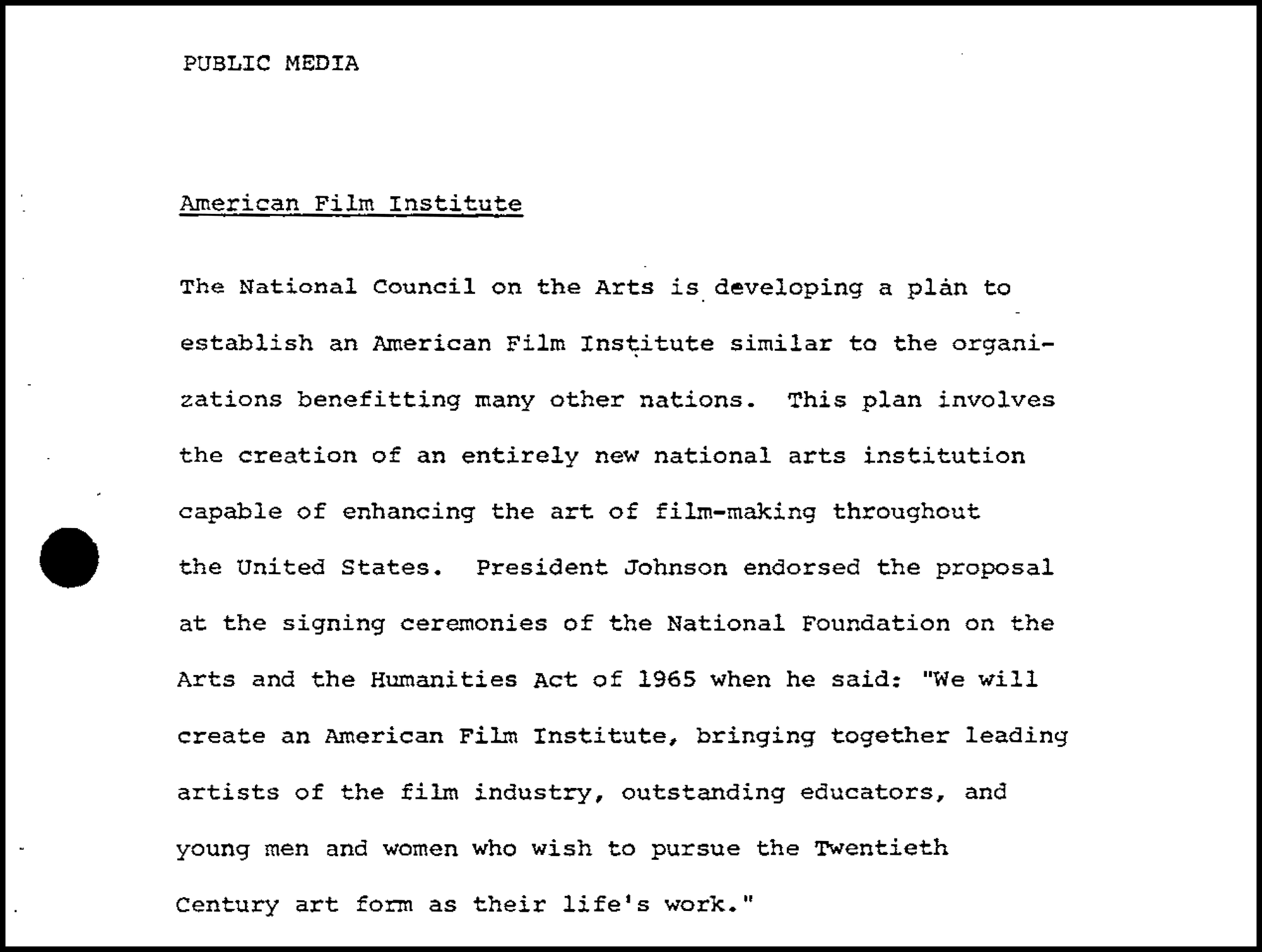
At the signing of the National Foundation on the Arts and the Humanities Act of 1965, Johnson enthusiastically endorsed the establishment of what would soon become the American Film Institute (AFI). In an annual report, the NEA recounts Johnson proclaiming, “We will create an American Film Institute, bringing together leading artists of the film industry, outstanding educators, and young men and women who wish to pursue the Twentieth Century art form as their life’s work.” The AFI and its premiere fellowship program flourished in the ensuing decades because of substantial and consistent NEA support, and it’s not the only legacy institution that was established and stewarded by the NEA: The Telluride Film Festival has been awarded 30 grants since 1978, and in 1981 the Sundance Institute was formed through funding and partnership with the NEA.
The NEA’s initial focus under the media umbrella was developing the AFI and awarding grants to select educational TV and radio programs. By 1969, grantees included Jonas Mekas’ Film-Makers' Cinematheque and the New York Film Festival. In 1972, the NEA’s first formal Public Media program extended its priorities into production, exhibition, education, and preservation. Public Media grants stayed on pace with the NEA’s considerable increase in appropriations from $9 million in 1970 to $149.59 million by the close of the decade (accounting for inflation, that would be like going from $76M to $655M today). By the bicentennial and height of the New Hollywood movement, the NEA began routinely awarding production grants directly to filmmakers.
“All the filmmakers around me applied for the same grants,” says filmmaker Lizzie Borden. Borden’s landmark feminist films Born in Flames (1983) and Working Girls (1986) were both supported by the NEA. “We helped and alerted each other about grants that were available. The grant system was hard because we had to fill out a lot of forms. It felt like getting the jackpot when we got the funding. I think it was never more than $3,000, but $3,000 was enormous.”
Access to public funds (including federally funded state arts and humanities council grants) enabled numerous filmmakers outside of the Hollywood mainstream to pursue their work and find their audiences. In March, my Twitter and Bluesky followers shared who they thought of as the key U.S. indie filmmakers of the 20th century. I crowdsourced about 100 names; 26* of these filmmakers received reported NEA production grants—including notable experimental filmmakers and key members of the L.A. Rebellion (a Black independent film movement) and New Queer Cinema movements.
*All historical grant data is sourced from NEA annual reports from 1965 to the last round of independent production grants in 1995. Filmmakers may have received NEA-supported production grants after 1995 through regranting organizations, but this data is less consistently documented.
But there are countless filmmakers outside of the ones crowdsourced that received notable NEA production support (including Lizzie Borden). Robert Downey Sr.’s Two Tons of Turquoise to Taos Tonight (1975) was an early NEA production grant recipient. Robert Duvall, already with the first two Godfather films under his belt, received an NEA grant for his narrative directorial debut Angelo My Love (1983). In 1981 alone, the NEA’s roster of production grants include what would eventually be Les Blank’s Burden of Dreams (1982), Charles Burnett’s My Brother’s Wedding (1983), Kathleen Collins’ Losing Ground (1982), Julie Dash’s Daughters of the Dust (1991), Donna Deitch’s Desert Hearts (1985), and Wayne Wang’s Chan is Missing (1982) in addition to the completion of Bill Gunn’s Personal Problems — Part 2 (1980).
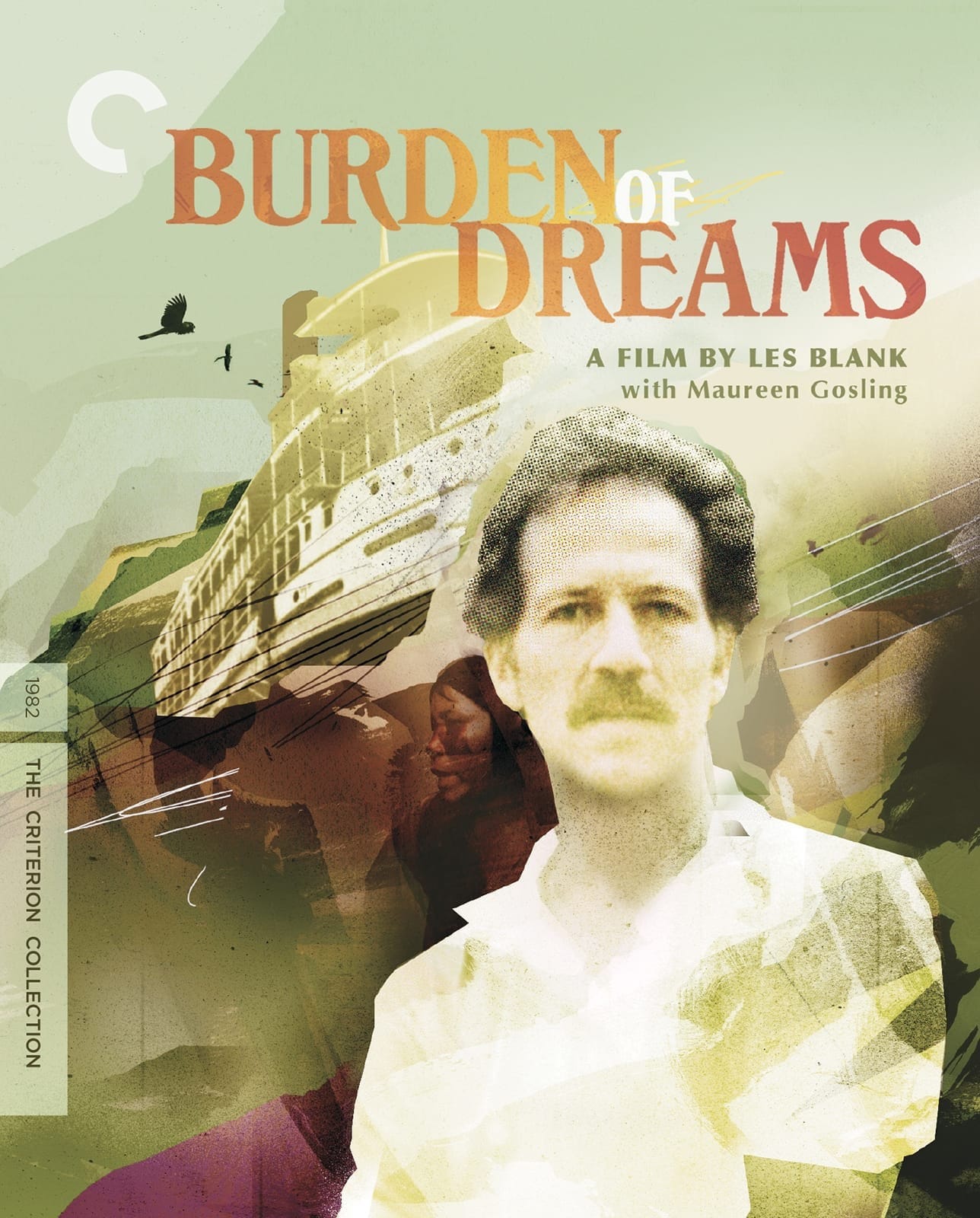
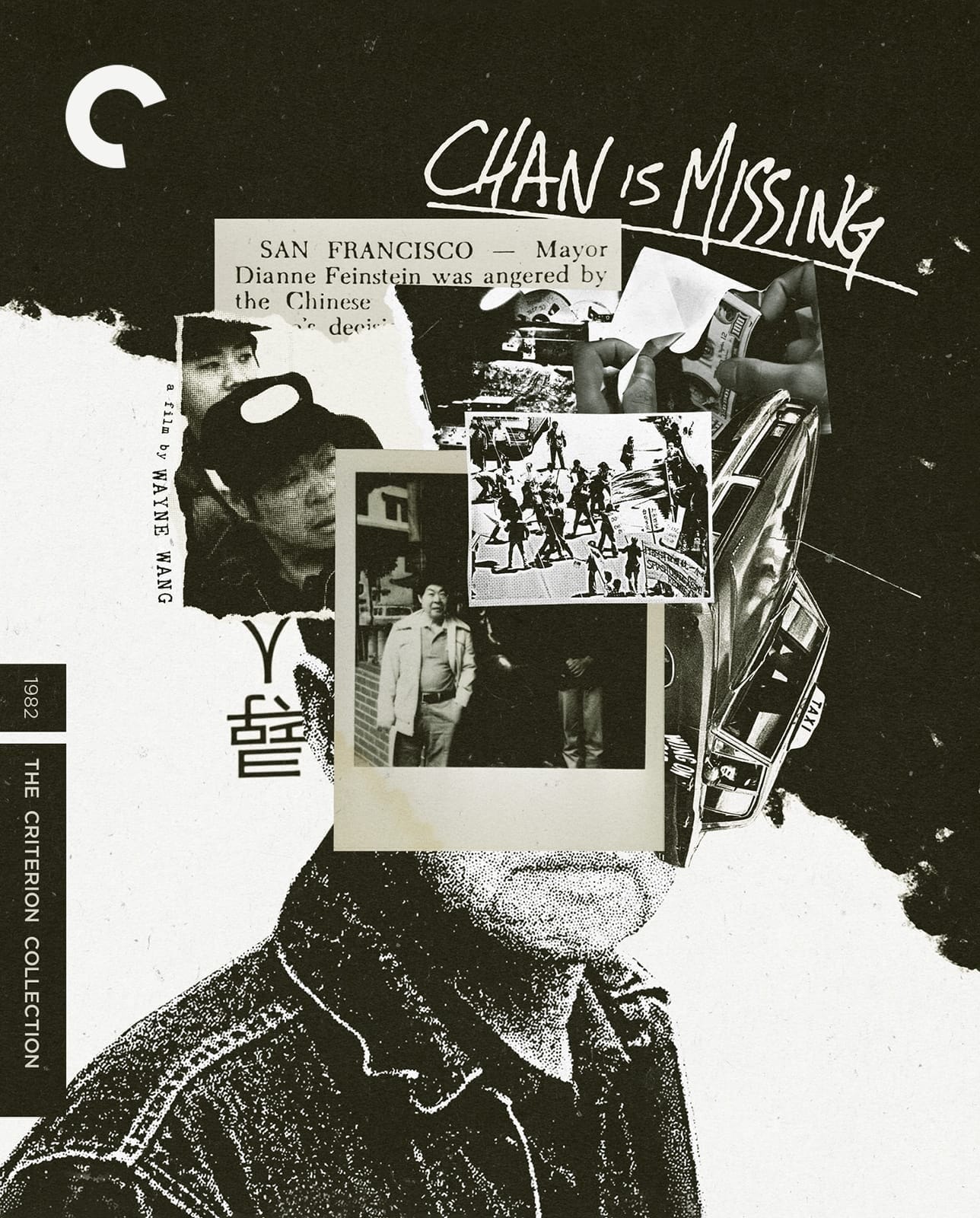
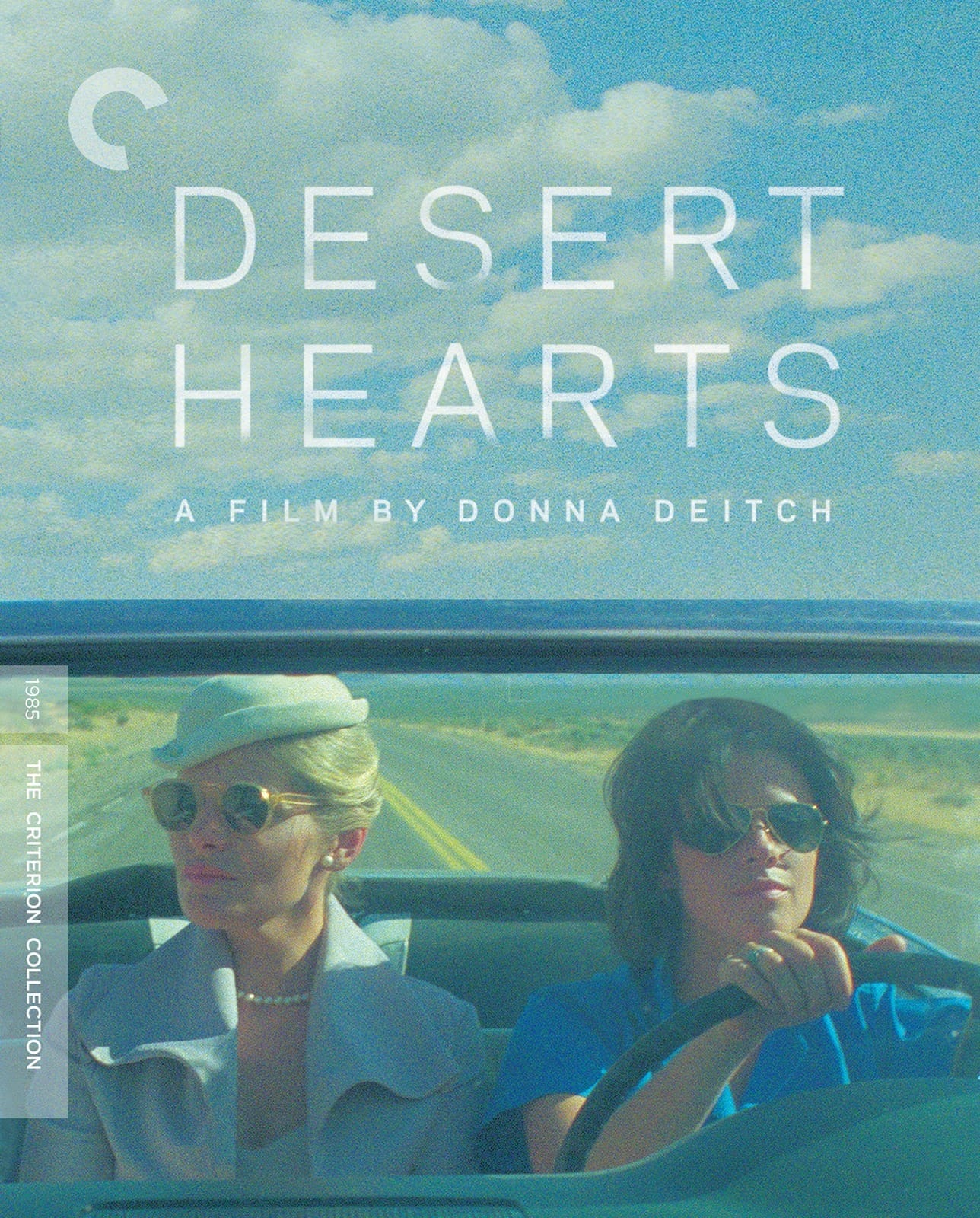
Burden of Dreams, Chan is Missing, and Desert Hearts all received NEA support.
Public funds also supported some of the most prolific documentary filmmakers of the 20th century. In addition to Blank, Riggs, and Wiseman, NEA grants supported Christine Choy, Jennifer Fox, Barbara Kopple, Mira Nair, Albert and David Maysles, Errol Morris, and D.A. Pennebaker and Chris Hegedus. And as for experimental film, the NEA embraced the emergence of art film and video. Scott and Beth B, Stan Brakhage, Suzan Pitt, Yvonne Rainer, and countless, countless others received grant support.
Even Richard Linklater's $23,000 budget for Slacker was partially supported by an NEA-backed program through the Southwest Alternative Media Project— a now-defunct nonprofit that provided filmmaker grants for projects within the southwest region. “This indie film that's made on a shoestring budget goes on to transform the landscape of American independents,” says Rebecca Campbell, executive director of Linklater’s Austin Film Society. “I think that's such an argument in favor of these small-scale grants.”
NEA-supported productions include an impressive array of smaller films that have had a lasting legacy—like Slacker—but most notable is the support for women, filmmakers of color, and other filmmakers who would otherwise be on the margins. Nina Menkes, director of NEA-supported films Queen of Diamonds (1991) and The Bloody Child (1996), says, “The grant made the difference between not making it and making it, even though they were very low-budget.”
🎞️💸🎞️
If there is any distinct film movement that was made possible in part through public funds, it’s the same movement that would throw the NEA into a devastating culture war: New Queer Cinema. The key films that launched the movement were all NEA-funded, including Desert Hearts; Jennie Livingston’s Paris is Burning (1990); Todd Haynes’ feature debut “Poison” (1991); Marlon Riggs’ Tongues Untied, which aired as part of the (publicly-funded) POV series on (publicly-funded) PBS; Tom Kalin’s Leopold and Loeb retelling, Swoon (1992); Gregg Araki’s Totally F***ed Up (1993); and Cheryl Dunye’s Black lesbian comedy The Watermelon Woman (1996). The movement arose in response to the AIDS epidemic and social issues exasperated under the Reagan administration—and the consequential backlash was on par with homophobic talking points espoused during the period.
Conservatives had unsuccessfully called for the elimination of the NEA in the late 80s, arguing that certain NEA-backed projects were obscene, and thus, a misuse of taxpayer dollars. Targets included transgressive photographer Robert Mapplethorpe, whose traveling exhibit "The Perfect Moment" sparked a moral outcry from the American Family Association during the summer of 1989. "The Perfect Moment" was the last series Mapplethorpe debuted while he was alive. He died of HIV/AIDS just a handful of weeks before the outrage around his exhibit took shape. Shortly thereafter, the NEA adopted a decency clause that spiraled into a Supreme Court case. The performance artists that filed the lawsuit—Karen Finley, John Fleck, Holly Hughes, and Tim Miller, also known as the “NEA Four”—were all performers ruminating on queer identity and/or the AIDS epidemic. The court ruled in favor of the clause, which targeted projects involving sex and sexual identity (including depictions of “homoeroticism”). Echoes of this clause can be heard throughout the NEA’s contemporary policies adhering to Trump’s executive orders targeting promotion of “diversity, equity, and inclusion” and "gender ideology."
After the introduction of the obscenity clause, Todd Haynes' Poison became the next battle in the (objectively homophobic) culture war surrounding the NEA. There was, of course, outrage that the film had been funded despite the NEA's capitulation to Republican demands. But conservatives also took issue that Poison was awarded at Sundance in 1991—another publicly funded organization. (Though Sundance released a statement supporting Haynes, The LA Times reported, “The festival first declined to permit release of photos of Haynes receiving his award at a podium prominently decorated with Sundance logos.”)
Budgets were pulled from NEA annual reports and adjusted for inflation using the U.S. Bureau of Labor Statistics CPI Inflation Calculator. There is a likely minimal margin of error as this author does not normally dabble in economics.
The Republican Revolution of 1994 meant that for the first time in NEA history, the House of Representatives had a GOP majority, and Revolution architect Newt Gingrich was in the position to make good on promises to gut the agency. Both NEA and NEH budgets were slashed by about 40%, and 1995 was the final year that the agency provided individual production support. Accounting for inflation, budgets for both federal agencies have essentially plateaued since 1996, never again reaching the investments made during their first three decades.
Part Two will cover the next 30 years of NEA film and media support and impacts of the 2025 NEA grant rescissions.
Special thanks to Peter Raleigh for reading an early draft and to Joe Engleman for reading through this piece in every variation (and every moment of frustration) over the last several months.
If you read this and enjoy it, please consider sending a tip. :)
Want to learn more about the terminations and how NEA/NEH grants usually work? Read the piece I wrote for the Chicago Reader (recently announced as a 2025 Peter Lisagor Award finalist):
 Daniella Mazzio