
CLFF #3: TheyDream, A Bright Future/Un futuro brillante, Forastera
Plus two shorts screened at CLFF.

In yesterday's dispatch, I had vaguely referenced some circumstances that limited my writing time and focus. Yesterday morning, I sadly joined my parents in saying goodbye to our family dog (and really, my mom's second child) Butters. Today would've been his 16th birthday. He was an incredible dog—silly, endlessly loyal, and smart in ways that always surprised me. I moved out for college only 3.5 years into his life, but coming home always felt like coming back to a toddler little brother who was so excited to have his sister to play with. He was the best, and I am going to miss him very, very dearly.
I share this not only to eulogize Butters, but because mortality and loss has generally been on my mind quite a bit. Butters is the most recent reminder. Unintentionally, death also made up a great portion of the features and shorts I watched yesterday at the Chicago Latino Film Festival. I think every time we experience loss, we go through a sort of coming-of-age, no matter what age we actually are. It forces us to come to terms with realities we may feel unprepared for, or regrets we may feel too young to possess.
I kept that in mind last night as I tried to comfortably—and unsuccessfully—swallow my grief through the tradition of moviegoing. Today, I'm delighted to share with you three features and two shorts that I watched last night at CLFF.
SHORT: Ballad of Fishes and Birds/Balada de peces y pájaros
Directed by Anny Uribe Zambrano and Juan José Arévalo Reyes
Colombia 🇨🇴 / Spain 🇪🇸
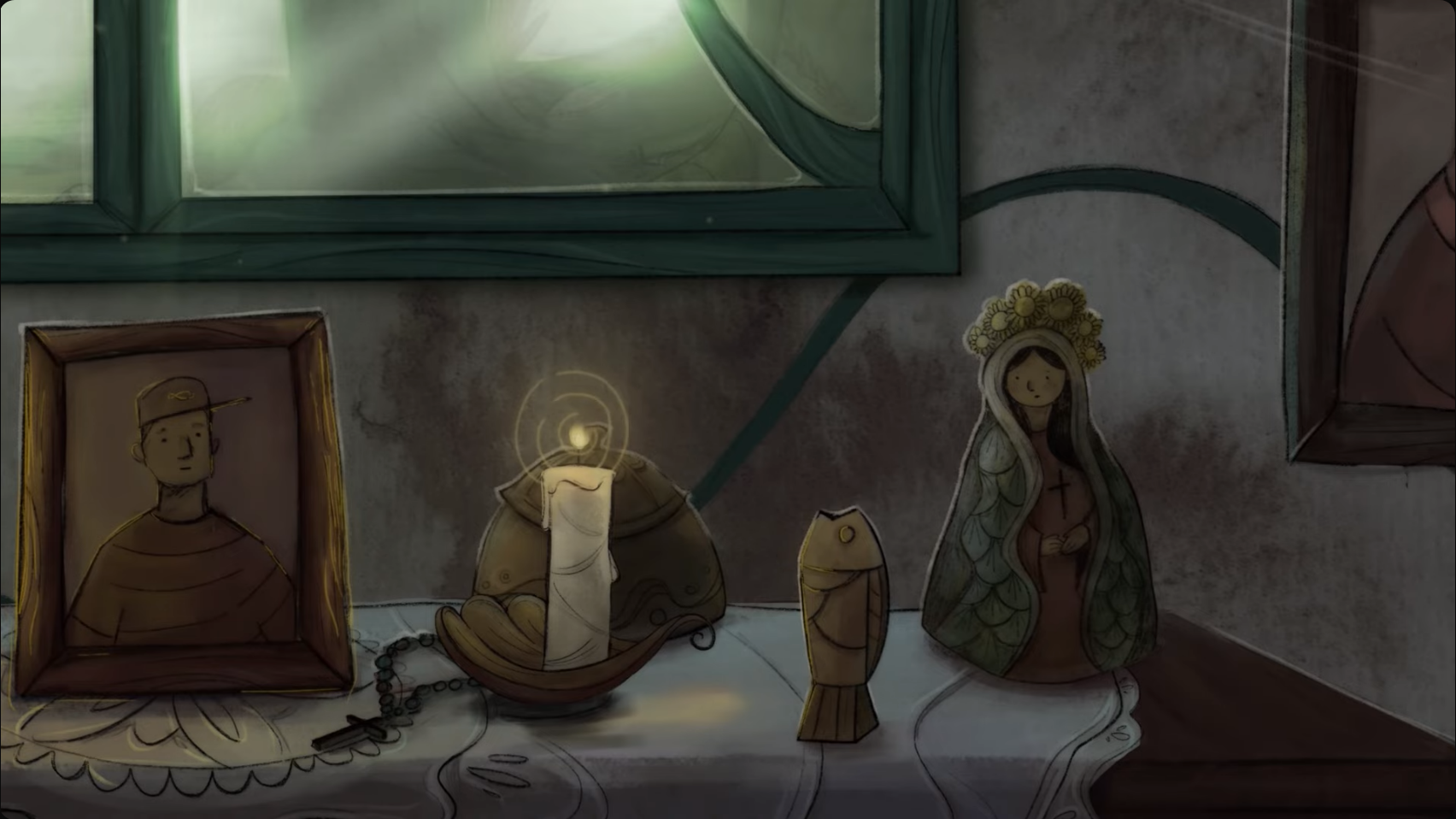
Ballad of Fishes and Birds set the tone for the screening of TheyDream to follow with an abstract, wordless animation about processing grief and letting go of resentment. The animation in this short stands using a combination of simple lines and textured coloring, making unique choices for particular sequences in using white to outline the black birds and using effects to produce a golden glow that fills the crevices of carved fish. I really enjoyed how the directing duo rely on visuals and score to convey the emotional journey and hope to see more work from the pair in the future. Studio Ghibli comparisons are overused, but there is a kinship in how Zambrano and Reyes bring the child at the center of their short into a world of nature and fantasy to process harsh realities around them.
TheyDream
Directed by William D. Caballero
Puerto Rico 🇵🇷 / USA 🇺🇸
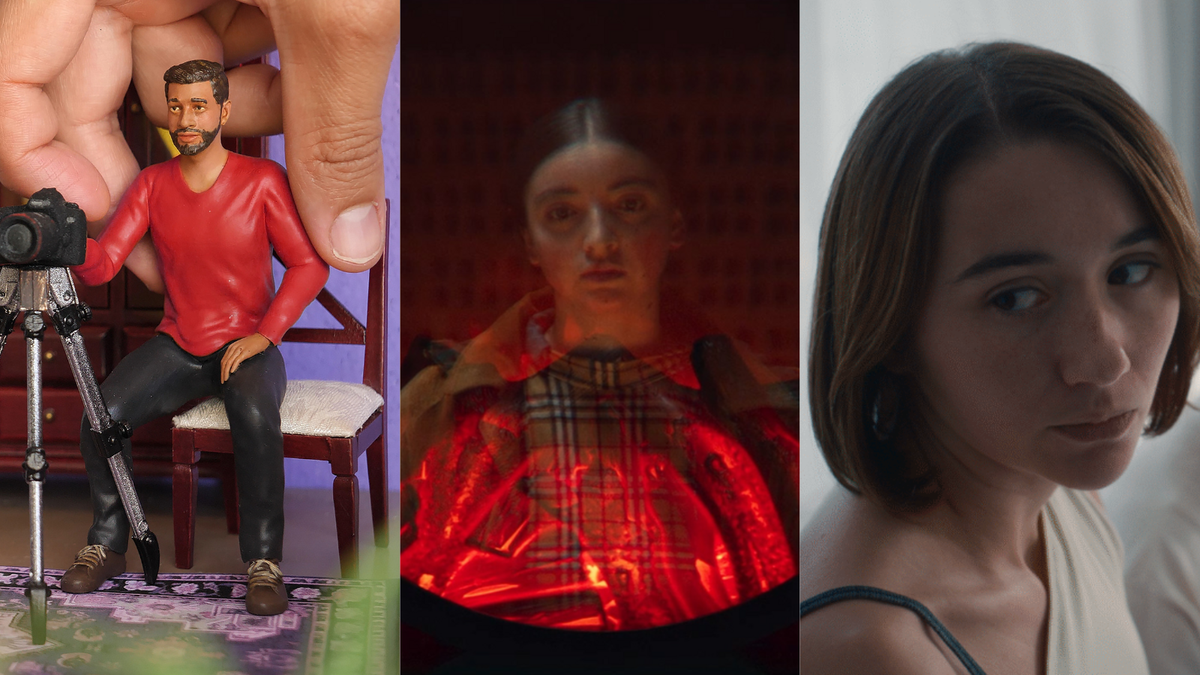
TheyDream has so far been my most challenging watch from the festival, and I don't mean that positively. On paper, it should check all of my boxes (which is exactly why I was glad to catch it now after sadly missing its Sundance premiere): I have a pet interest in archival memory, especially as it pertains to Latino stories; I love documentaries where the filmmaker's process and personal relationship to the subject becomes part of the narrative; I am obsessed with miniatures as an artform and have long wanted to personally get into the medium; and of course, grief is very heavily on my mind.
In thesis form, TheyDream has a lot going for it. Filmmaker William D. Caballero is interested in many of the aforementioned subjects I'm interested in. He's a talented miniature artist who employed a great team of diverse animators to contribute various styles to this one-of-a-kind documentary. There are glimpses of brilliance, particularly as Cabellero bonds with his mother in coaching her through reenactments, capturing their shared experience of processing grief by embodying the people they have lost. And, rightfully, Cabellero understands his mother "Milly" is a subject worthy of a documentary.
The filmmaker has shared that the end-product of TheyDream is much different than what he initially pitched when receiving funding as a quick succession of family losses began to shape a new narrative in the film. Unfortunately, that change of thesis and distance from conception is evident. Cabellero doesn't quite know how to structure the film. It's a relatable problem I sometimes have with writing essays—by the time you come to the conclusion, you stumble upon a thesis that is different from the one you started with. Final cut deadlines might have stymied his ability to rework his materials into a structure that supports its conclusion, but I wish the film followed a more consistent journey. The final product is more a series of day trips.
My other issue is a little harsher. When a filmmaker produces such an evidently personal film, it can feel inappropriate to come at the filmmaker himself. But truthfully, the problem is I don't feel that Caballero ever gets truly vulnerable in the audience, and certainly not in the way his mother and other family members do—which makes the way he turns the camera and tape recorder on them feel occasionally exploitative. A nice gesture toward his mom that makes up the conclusion of the film is framed too much like a Ty Pennington presentation. I don't mind Caballero becoming a character in his own film, but his self-actualization is scripted and prepared in a way the rest of his family is not afforded.
Caballero came out for a Q&A after the screening, and I actually really enjoyed his charm and no-bullshit conversational attitude presented in front of this intimate, live audience. I hope to see more of that personality shine through in later work from the director.
A Bright Future/Un futuro brillante
Directed by Lucía Garibaldi
Uruguay 🇺🇾 / Argentina 🇦🇷
A Bright Future, on the other hand, is probably my favorite film from the festival so far. The sci-fi, lo-fi imagination from Lucía Garibaldi follows the very charming Elisa (Martina Passeggi), an 18 year-old whose IQ and creative sensibility (she drew a "weird house" where most kids draw a "normal" one) has qualified her to represent her neighborhood (commune?) as one of the bright 18-25 year olds tasked with solving the climate crisis. There's an element to this that is not unlike Michael Bay's The Island—residents of these various, undefined neighborhoods are told stories about the environmental danger and desolation outside of their confinement while being simultaneously dazzled by the myopic exclusivity of "the North," where only the most elite reside (including the young, creative minds and winners of an auction). Elisa's sister is already out allegedly changing the world in the North, and now she is expected to follow in those footsteps. Her poor, suffering and overworked mother also hopes to save enough pesos to win the auction so that the whole family can escape from the lower ranks.
Amongst a cohort of precocious youngsters, Elisa's precociousness comes in the form of her clear-headedness about the rigged system. She isn't impressed by the promise of the North, and doesn't blindly believe their insistence that dogs are extinct and ants are deadly. She just sees a caste system that sees her youth as a commodity, while robbing her of the ability to actually experience it.
A new neighbor with a prosthetic leg named Leonor moves next door (Sofía Gala Castiglione, playing a balance between self-assured and insecure). Leonor's presence lights something up in Elisa—maybe it is a sexual awakening, or maybe Leonor fills the role of the cool anti-authoritarian older sister Elisa doesn't have, but her presence is enough for Elisa to determine that she will reject the North and hustle however she can to win her mom the auction so that she can assure her happiness.
There's unpolished edges to Garibaldi's film—this near-future world isn't well-defined, and while that doesn't seem to be of much importance to the filmmaker, there are times where the environmental predicament seems abandoned altogether. But as a coming-of-age story, I found A Bright Future to be sharp, quirky, and refreshingly edgy.
SHORT: In The Still Of The Night/En la quietud de la noche
Directed by Aristides Mantilla
Mexico 🇲🇽
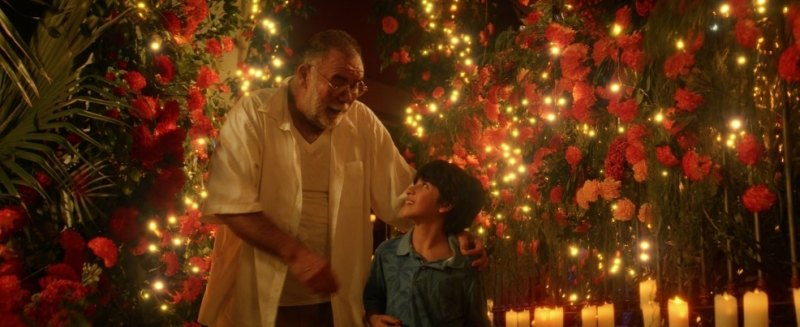
Let's start with a positive regarding the short In The Still Of The Night: There's some beautiful production design that makes the Día de Muertos setting come alive, and there is a very sweet and gregarious performance from Jesús Ochoa.
Otherwise, I really disliked this short, which thanklessly features Oscar-winning actress Yalitza Aparicio and seems to use the Day of the Dead as a framework to sneak in some pro-life propaganda (including an ultrasound image that makes earlier assertions all the more cartoonish).
Forastera
Directed by Lucía Aleñar Iglesias
Spain 🇪🇸
Forastera, my final watch from last night, is a curious watch that doesn't commit to the full boundaries of its premise. Zoe Stein plays Cata, a high school senior on vacation with her grandparents in Mallorca with her younger sister. A short while into this trip, Cata is the first person to find her grandmother Catalina's (Marta Angelat) dead body. This understandably traumatic experience shakes Cata, whose grieving process begins to take unusual turns—think Jonathan Glazer's Birth if all the parties involved were related and there was a lot less romantic tension.
That possible possession angle is more interesting than where Forastera lands. The film keeps its trickier emotions interior, but this doesn't go much further than suggestion and a lot of beautiful people striking pensive glances over the very beautiful sea. Not every feeling has to be spoken, but I'm not sure anyone's feelings amount to more than "I am grieving" — a not-unreasonable direction, but a confounding conclusion given the suggested fractures between Cata's mother and her grandparents, the casual cruelty of some fellow vacationing teenagers, and the boundaries Cata crosses by filling in her grandmother's role for her grandfather, Tomeu (Lluís Homar). Forastera is not an uninteresting film, but it's a little too safe for its own good.
I'm saving my dispatch of the Chicago Palestine Film Festival's Passing Dreams (which I saw Saturday evening) for when it has a little bit more room to breathe. In the meantime, continue to look out for my CLFF reviews!
Until tomorrow.... ❀